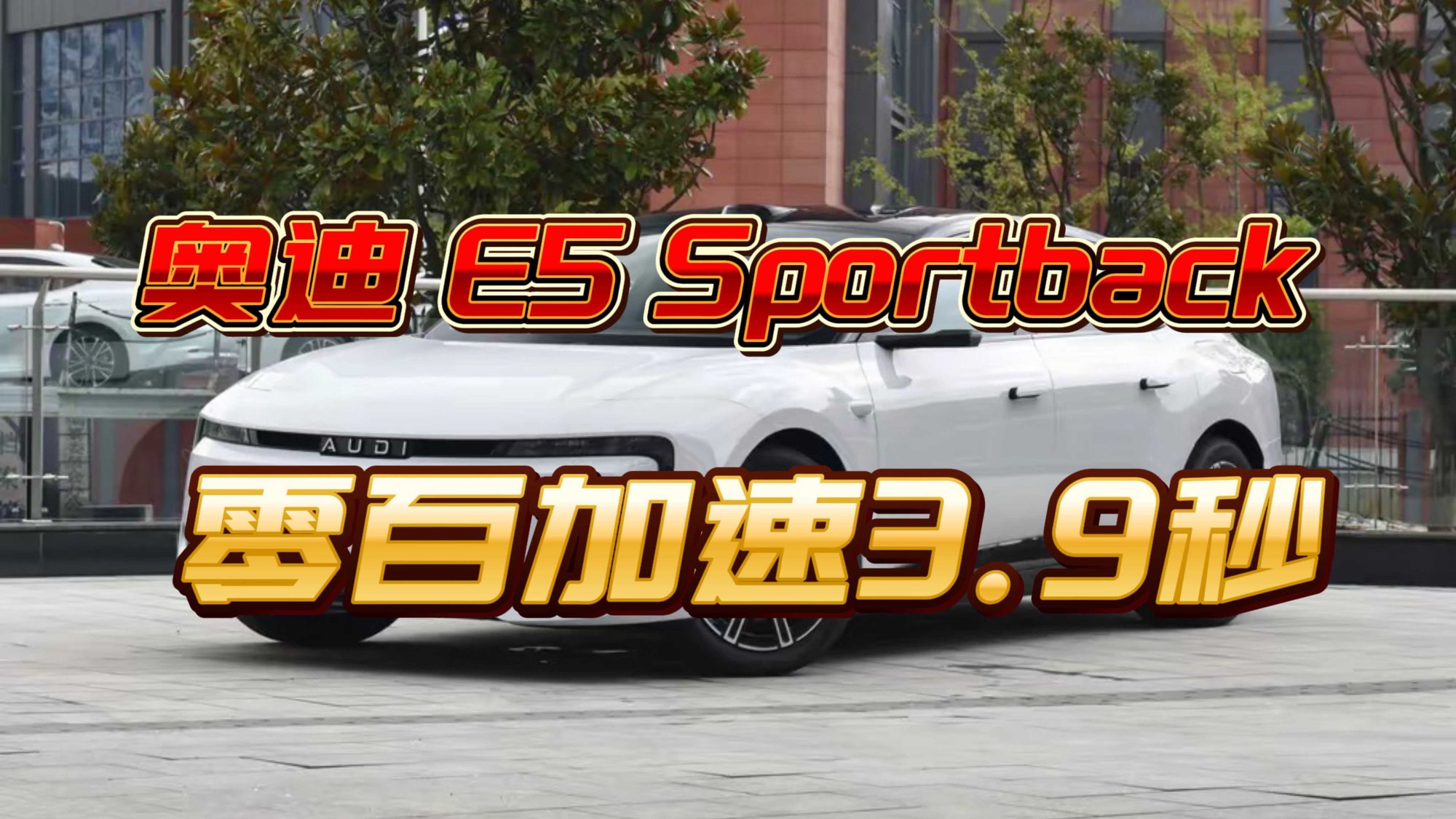
Recently, I had an in-depth experience with the SAIC Audi E5 Sportback. This model, which has been on the market for only a few months, has consecutively won annual car titles from many influential platforms (CCOY Auto Oscar's China Car of the Year, Weibo Car of the Year, etc.), and it truly made me feel the dedication of a traditional luxury brand in the field of electrification - not relying on sentiment to build momentum, but using solid product strength to deliver an answer that fits the needs of daily car use. Especially during this period of winter driving, from low-temperature range to snow-day handling, and then to the stability of the infotainment system and assistance systems, this car's performance has been impressive, and it also gave me a more concrete understanding of luxury electric models. Today, starting from my own test-drive impressions, I will talk with everyone about this car's actual performance.
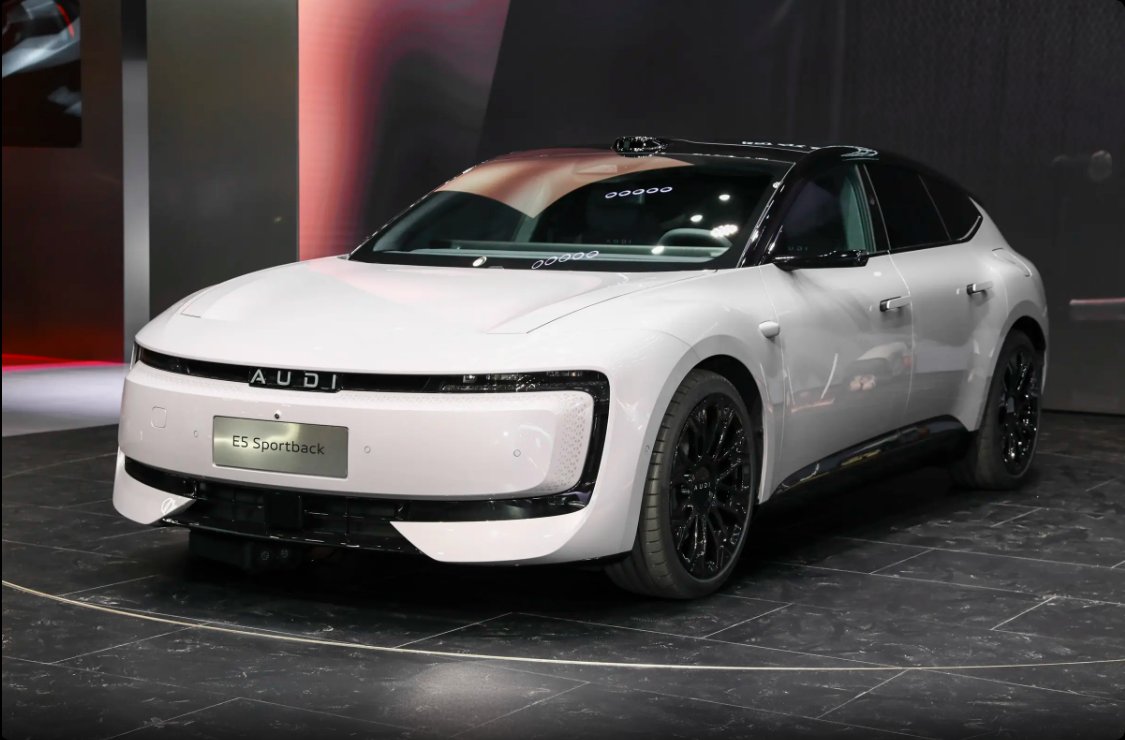
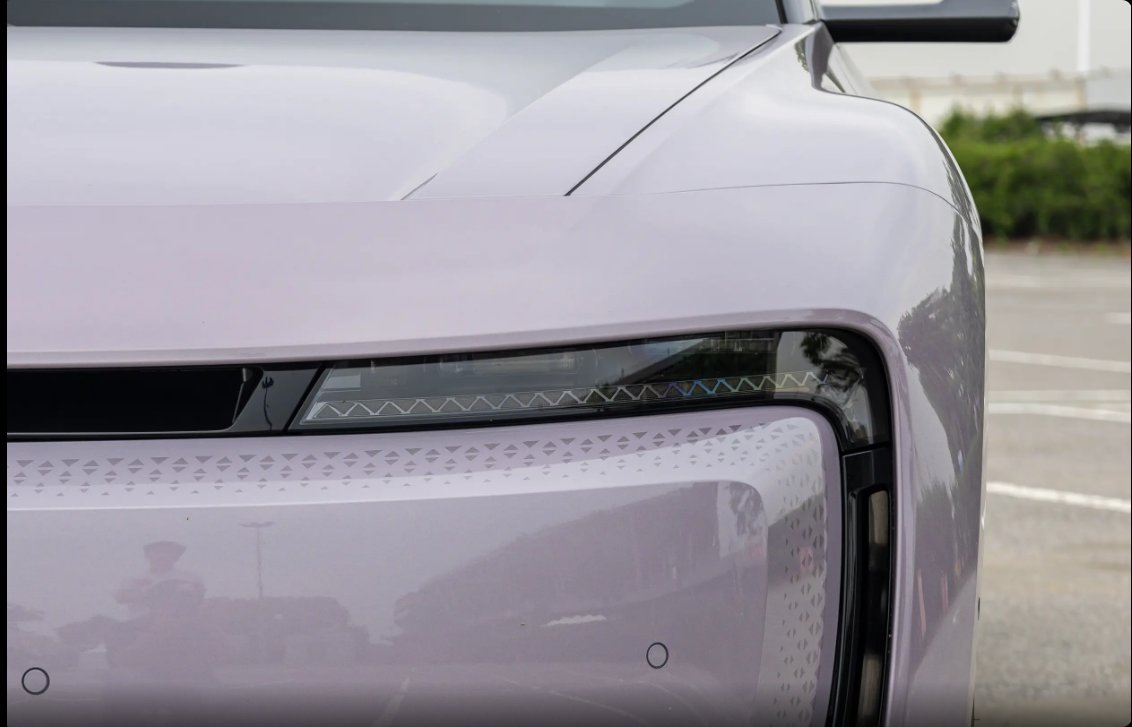
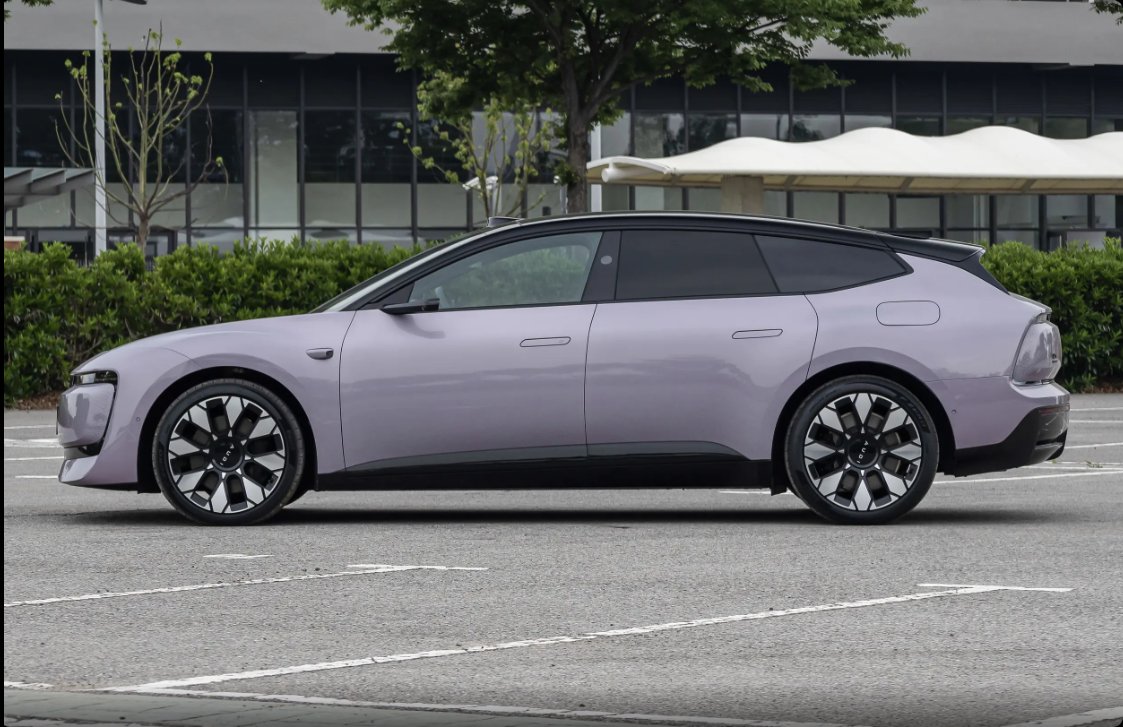
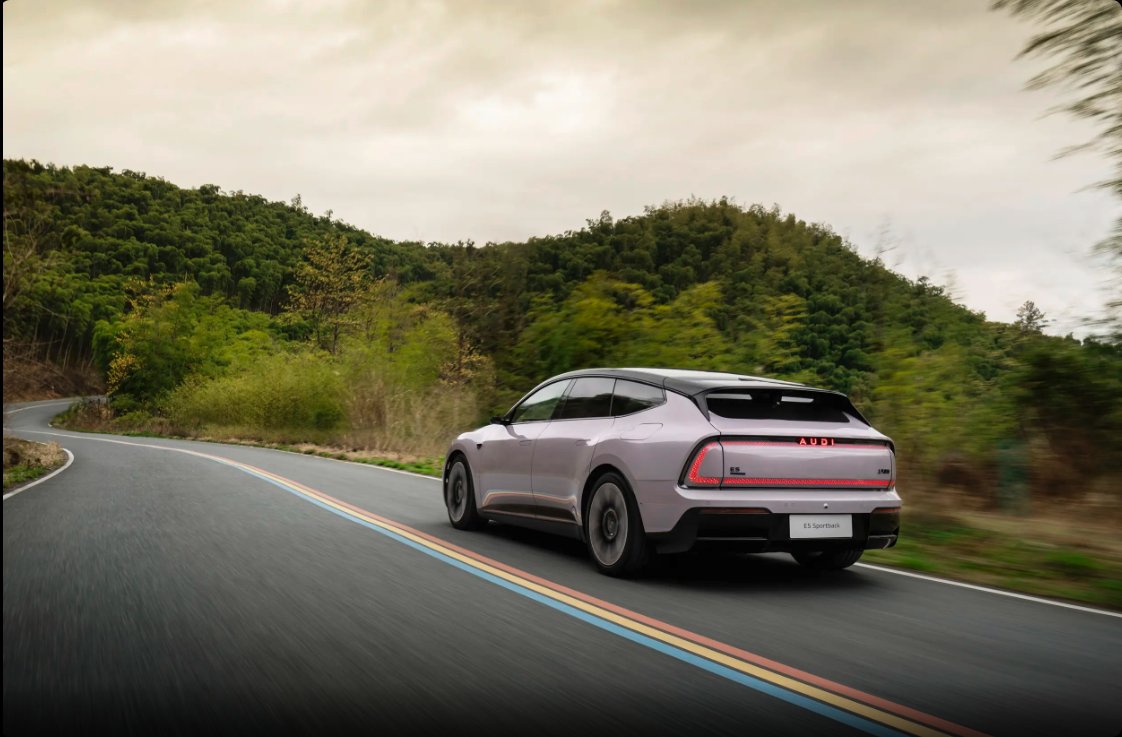
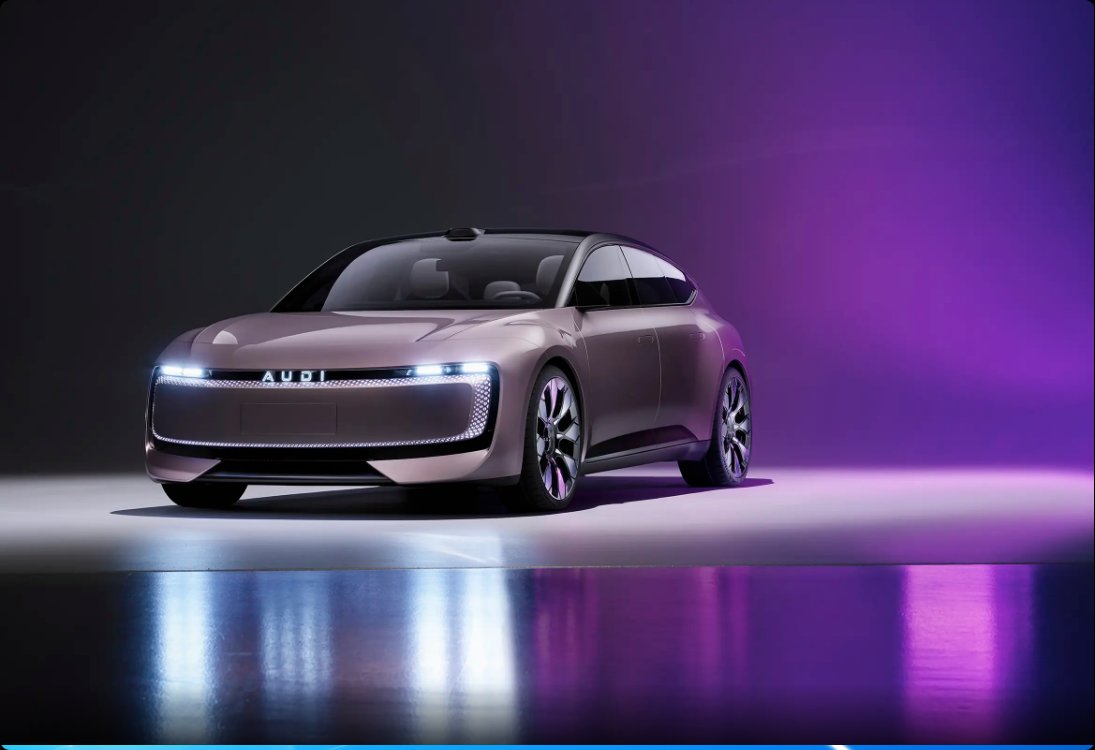
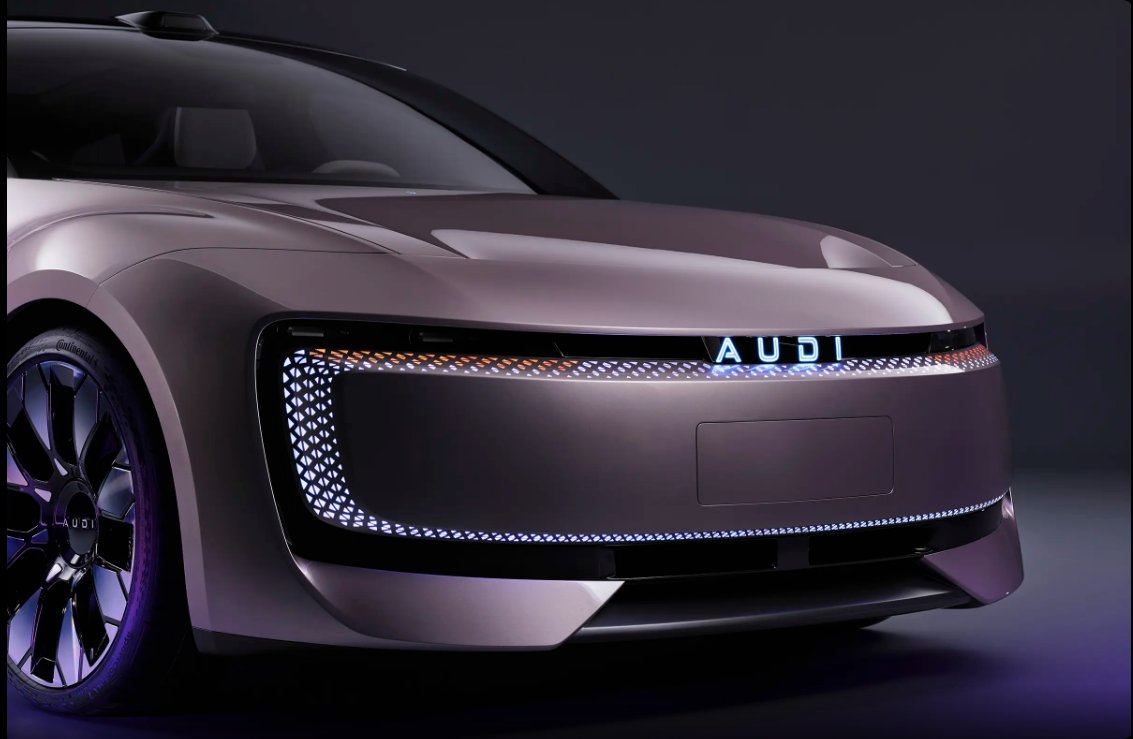
The body styling is one of this car's major features, combining the fastback lines of a classic coupe with the practical rear of a wagon, creating a very unique crossover style. The body dimensions are 4881 millimeters long, 1960 millimeters wide, and 1479 millimeters high, with a wheelbase reaching 2950 millimeters. The low-slung body posture gives the overall appearance a strong sporty feel, and the visual effect on the road is very stretched. The hidden door handles and electronic exterior rearview mirrors on the side not only make the lines smoother, but also press the drag coefficient down to 0.252, which also helps reduce energy consumption. The higher-trim Dingzhi Performance quattro and Flagship quattro models use 20-inch "mixed tires," with front tires 245 millimeters wide and rear tires 285 millimeters wide. Just looking at the appearance, they are full of tension, and in actual driving, the improvement in grip is also very obvious. The ring-shaped through-type taillight at the rear echoes the front light curtain. Details such as the blackened diffuser and hollow rear spoiler further strengthen the sporty feel. The overall design is unified front to back, with no sense of incongruity. Whether for family use or the occasional desire for a bit of driving atmosphere, this styling can adapt.
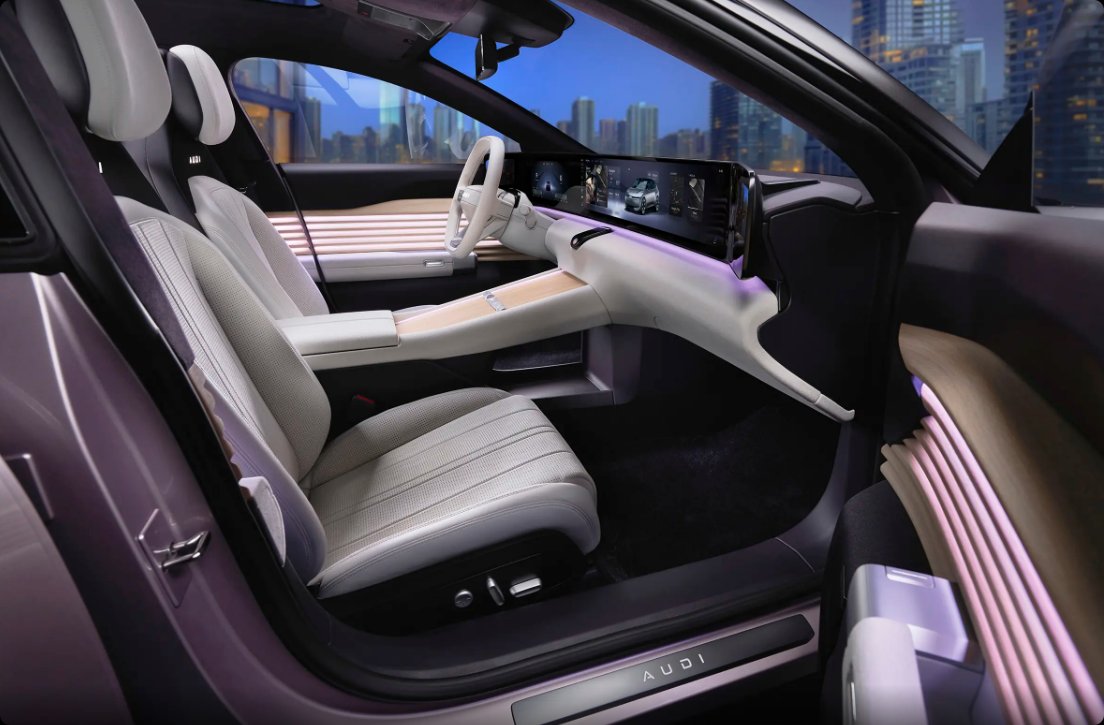
The interior uses a large number of horizontal lines, naturally integrating the 27-inch Mini LED integrated curved screen, air conditioning vents, and 30-color ambient lighting, so the screen does not feel abrupt and the visual impression is spacious and transparent. The triple screen, together with the electronic exterior rearview mirror displays on both sides, forms a complete information interaction interface. While driving, looking at navigation and vehicle information, and occasionally letting the front passenger watch a video, do not interfere with each other, so practicality is good. In terms of materials, the interior is largely covered in leather and suede, with wood grain trim accents. The stitching craftsmanship is very exquisite, and almost everywhere the hand can touch is soft material, continuing Audi's consistent luxury standard. Once seated inside, one can feel a texture different from ordinary new energy models.
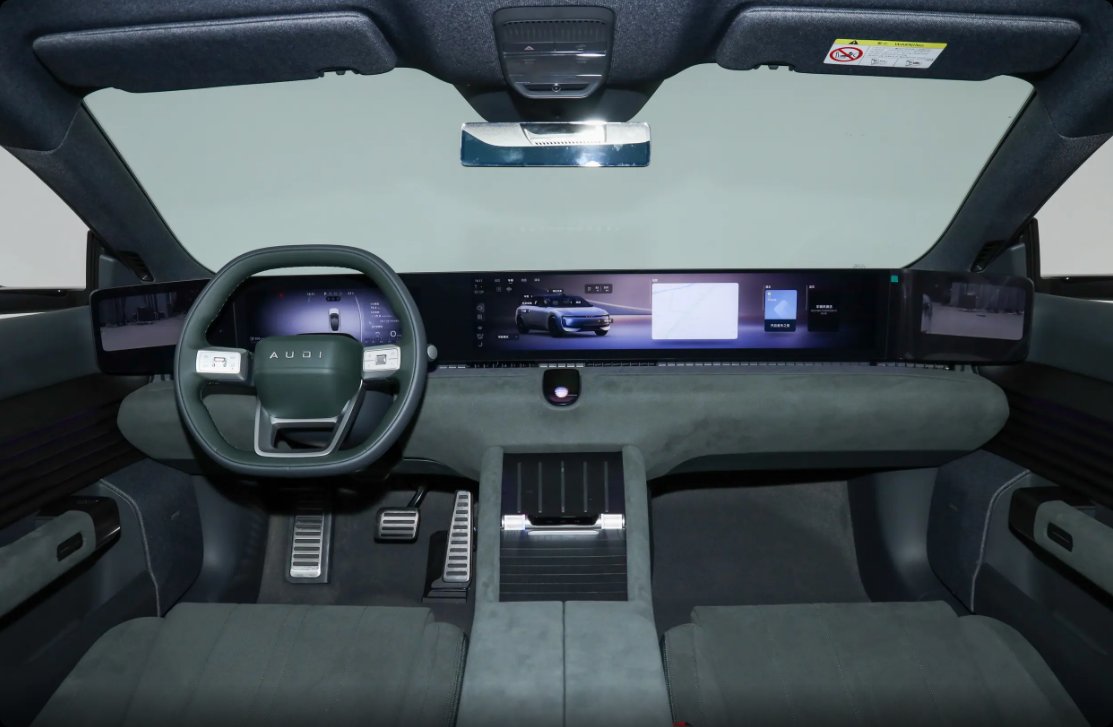 The smart cabin experience is a reflection of this car balancing technology and practicality. After all, when driving nowadays, the smoothness of the infotainment system and the convenience of operation are too important. The E5 Sportback is equipped with the Qualcomm Snapdragon 8295 chip, paired with the all-new AUDI OS operating system. In actual use, whether switching interfaces, opening functions, or voice interaction, it is all very smooth, with basically no lag or delay, and simultaneous multi-screen operation is completely fine. The system interface design is very concise, and the desktop can also be customized, placing commonly used functions such as navigation and music in prominent positions. It is quick to get used to, and even for a first-time driver, it does not take much time to figure out. The built-in "Audi Assistant" is jointly customized with Volcano Engine Doubao and supports four-zone voice recognition, which is especially practical in actual car use. For example, while driving, if the driver says "set the air conditioning to 26 degrees," and the front passenger says "turn on front passenger ventilation," the system can accurately recognize both, and it also supports continuous conversation, without needing to say the wake word every time. Operations such as adjusting windows and setting navigation can be completed just by speaking, without looking down, greatly improving driving safety.
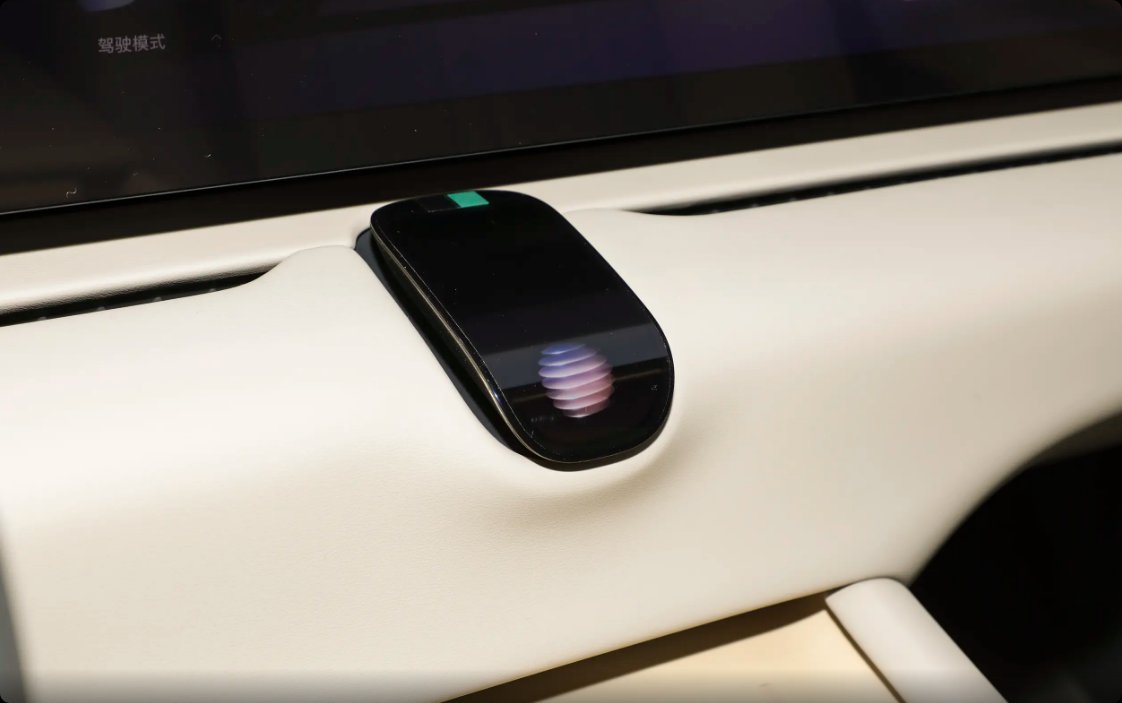
The "Audi Smart Island" design in the central armrest area is very thoughtful, somewhat like Apple's Touch Bar. It integrates more than 50 quick operations and also supports blind operation. While driving, if I want to switch songs or adjust the volume, I do not need to look at the screen and can operate by feel, which is especially convenient for someone like me who likes to drive one-handed. The 30-color ambient lighting standard across the lineup can also adjust color according to driving mode. At night, the atmosphere is good, and when occasionally going out with family and friends, the in-car experience is also better.
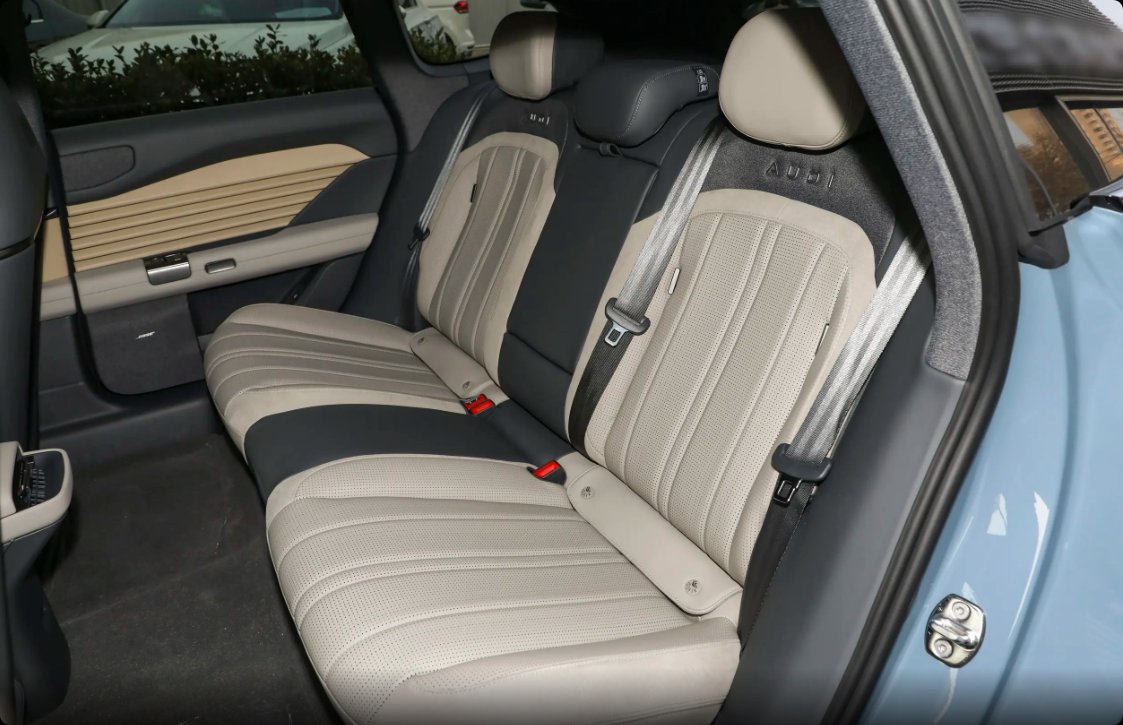
In terms of space, after all, this car is positioned as a mid-size car, and its family-use attributes are still relatively strong. The long wheelbase of 2950 millimeters makes the passenger space in the car very ample. The front seats are sporty in style, with good wrapping and support. Higher-trim models also have seat massage, heating, and ventilation functions. When I usually drive long distances, about two or three hours, turning on the massage function relieves a lot of fatigue in the lower back and back. Heating in winter and ventilation in summer provide a very good experience. For rear-seat space, legroom is acceptable, and sitting adults daily is completely fine. Although affected by the fastback styling, thigh support is average, the rear seats come standard with heating, which is very friendly to rear passengers. On weekends, when taking my parents out, they do not feel uncomfortable sitting in the back.
The storage space design is very thoughtful. There are many small storage compartments in the car, and the spaces in the door panels and central armrest box are very regular. Daily items such as water bottles, umbrellas, and backpacks all have places to go. The wireless phone charging pad supports 50W high power. Usually when driving out, placing the phone on it basically removes worry about range anxiety; after a day of commuting, the phone battery is basically fully charged. The trunk's regular volume is 347 liters, completely fine for 2-3 20-inch suitcases. The rear seats support 40:60 split folding, and after folding, the space can be further expanded. Last time I went camping with friends, large items such as tents, folding tables and chairs, and barbecue grills could all be easily loaded.
In terms of range and replenishment, in winter, the range and charging speed of electric vehicles are essential. The E5 Sportback lineup is built on an 800-volt high-voltage platform, which is the foundation for fast charging. The battery capacities carried by different configurations are 76 kWh, 83 kWh, and 100 kWh respectively, and the pure electric range under CLTC conditions is between 570 kilometers and 773 kilometers. The one I test drove was the Flagship quattro model, equipped with a 100 kWh battery, with a CLTC range of 647 kilometers. Driving in the city in winter, with the air conditioning and seat heating on the whole time, the actual range could run about 70 to 80 percent of the claimed figure. The battery drain is not fast, much better than some new energy models I had test driven before, and charging once a week for daily commuting is completely fine.In terms of replenishment efficiency, this car's performance surprised me somewhat. Official data shows that charging for 10 minutes can add about 380 kilometers of range, and fast charging from 10% to 80% takes between 0.22 hours and 0.58 hours depending on the configuration. Last time on a long trip, I charged at a highway service area and added more than 400 kilometers in about 15 minutes, just enough to drive to the next service area. By the time I took a break and ate something, replenishment was complete, basically without having to deliberately wait for charging. In addition, the vehicle also comes standard with VTOL mobile power station functionality, with a maximum external discharge power of 6.6kW. On weekend camping trips, cooking hot pot, running a projector, and charging camping lights can all rely on the car for power, expanding many car-use scenarios. This point is especially practical for friends who like the outdoors.
When driving in winter, in addition to range and replenishment, the stability of the three-electric system and the vehicle's handling are also crucial, especially on snowy days, when grip and chassis performance directly affect driving safety. The E5 Sportback's three-electric system performs very steadily at low temperatures, charging speed is basically unaffected, and the infotainment system and assistance-related functions also run stably, without lag or failure, which is better than many new energy models. And Audi's quattro intelligent all-wheel drive system, in this car, made me feel even more the technical heritage of a traditional luxury brand.
This all-wheel drive system is composed of front and rear dual motors, and the performance of different configurations is tiered. The Dingzhi Performance quattro model has a total system power of 386 kilowatts, about 525 horsepower, and combined torque of 725 N·m, with an official zero-to-100 acceleration of 3.9 seconds; the Flagship quattro model's combined power rises to 579 kilowatts, about 787 horsepower, with torque reaching 800 N·m and zero-to-100 acceleration of 3.4 seconds. With such power parameters, it actually drives without being impulsive at all. The power tuning is very linear, delivering exactly as much as you press. When starting and overtaking on city roads, a light press on the accelerator reveals abundant power. During high-speed cruising, pressing deeper on the accelerator also brings rapid acceleration, with no lag, giving the driver a lot of confidence. Last week when it snowed, I drove this car out, and the quattro all-wheel drive system's grip performance was particularly good. When cornering and changing lanes, the body was very stable and basically would not slip. Even on snow-covered roads, it could handle things easily, far more reassuring than a two-wheel-drive model.
Another major support for the handling feel is this car's chassis system. Higher-trim models come standard with German Continental air suspension, CDC continuously variable damping shock absorption, and a rear-wheel steering system, plus a front double-wishbone and rear five-link independent suspension combination, balancing handling and comfort. The air suspension can intelligently adjust body height. When driving on rough roads, it raises the body to improve passability; when driving at high speed, it lowers the body to enhance stability. Last time on a rural path, the road surface had many potholes. After raising the body, there was basically no need to deliberately avoid small potholes. The CDC shock absorbers can sense road conditions in real time and dynamically adjust damping firmness. During spirited driving, body roll is very small and the posture is very stable; when going over speed bumps and bumpy roads, they can also effectively filter vibrations, without a harsh bumping feeling, achieving "tough but not hard, comfortable but not swaying." Whether for the driver or passengers, the experience is very good.
The rear-wheel steering system is a feature I find very practical. This car's wheelbase is 2950 millimeters, which is not short, but at low speed, the rear wheels turn in the opposite direction of the front wheels, reducing the turning diameter. When making U-turns in residential communities and parallel parking, it is especially agile, comparable to a compact car, and there is no longer any need to repeatedly shuffle because of the long body. At high speed, the rear wheels turn in the same direction as the front wheels, and the body's follow-through when changing lanes is very good and very stable. When changing lanes and overtaking on the highway, I feel especially confident. In addition, higher-trim models are also equipped with Brembo high-performance front brake calipers and wide tires, with a 100-to-0 braking distance of only 32.8 meters. The strong braking force and abundant power form a very good combination. Even during emergency braking, the body can remain stable, providing sufficient safety assurance for driving.
The vehicle's assistance-related functions are remarkable. The entire lineup comes standard with lidar, plus 3 millimeter-wave radars, 12 ultrasonic radars, and 11 cameras, forming a 360-degree all-around perception system. The NVIDIA Orin-X computing chip with computing power up to 254 TOPS provides a solid hardware foundation for these functions. This system was jointly developed with Momenta and has been specially optimized for China's urban roads and highway scenarios, integrating Audi's driving characteristics. In actual use, the experience fits Chinese driving habits very well.
In highway scenarios, functions such as full-speed adaptive cruise, automatic following, lane centering, and automatic lane changing are all very easy to use. With a light grip on the steering wheel, the vehicle can automatically adjust speed according to the speed of the car ahead and maintain a safe distance. When going through curves and slopes, the accuracy of lane centering is very high, without drifting left and right. Last time on the highway, after using the assistance functions for two hours, fatigue was greatly reduced. In urban road scenarios, the system can accurately recognize traffic lights, achieve automatic start and stop, and also avoid pedestrians and non-motor vehicles crossing the road. The following function in congested sections is also very practical, without frequent braking and accelerator use, greatly reducing the operational burden of urban commuting.
The assisted parking function covers more than 300 scenarios, and can easily handle vertical spaces, parallel spaces, and diagonal spaces. The 360° panoramic view and transparent image functions can clearly show parking space dimensions and surrounding obstacles. Even for beginners, parking is easy. There are also functions such as memory parking and automatic valet parking assistance, which are especially practical in fixed scenarios such as residential communities and shopping malls. Without doing anything yourself, the vehicle can automatically plan a path and complete parking. It is worth mentioning that when these assistance functions are working, there is no abrupt acceleration, braking, or steering. They always maintain Audi's distinctive driving quality. The driver can both enjoy the convenience of technology and stay in control of the vehicle, without a feeling of losing control.
In terms of safety configuration, this car is very comprehensive, taking both active and passive safety into account, making driving out especially reassuring. At the active safety level, in addition to basic configurations such as ABS and brake force distribution, there are also warning systems such as lane departure warning, forward collision warning, and rear collision warning, as well as intervention functions such as active braking, lane change assist, and lane keeping assist. Last time while driving in the city, a pedestrian suddenly rushed out from the roadside. The system immediately issued a warning and also actively applied braking measures, avoiding an accident. This function is extremely important for urban commuting. At the passive safety level, the car is equipped with front airbags, side airbags, side curtain airbags, and front center airbags, forming an all-around protection system. The body adopts a high-strength load-bearing structure, which can effectively absorb energy in a collision, reduce deformation of the passenger compartment, and provide sufficient survival space for occupants. In addition, functions such as in-car vital signs detection, passive pedestrian protection, and tire pressure display further improve the safety factor. Whether for the driver or passengers, everyone can feel more at ease.
Finally, let me talk about configuration details. This car's standard equipment across the lineup can basically meet all daily needs, without needing to pay extra for options. The non-openable panoramic sunroof, frameless doors, hidden door handles, electric tailgate, keyless entry, keyless start, and remote start improve the convenience of car use; the built-in dashcam, wireless phone charging, and 30-color ambient lighting balance practicality and atmosphere; automatic air conditioning, in-car air purifier, and PM2.5 filtration device can ensure in-car air quality, especially practical on hazy winter days.
Higher-trim models also add configurations such as electric soft-close doors, intelligent dimming canopy, rear privacy glass, 18-speaker BOSE audio, negative ion generator, and factory-installed ETC, further improving the user experience. The intelligent dimming canopy can automatically adjust light transmittance according to external light, effectively blocking ultraviolet rays and heat in summer, without the need for additional sunshade film; BOSE audio has very good sound quality with clear layering, and listening to music while driving is a pleasure; factory-installed ETC saves the trouble of later installation and makes highway driving more convenient.
As an important model in SAIC Audi's electrification transformation, the E5 Sportback did not fall into simple parameter stacking. Instead, through a reasonable configuration combination and precise tuning, it combines the technical foundation of a luxury brand with the practicality of new energy. From exterior design to interior texture, from spatial practicality to range replenishment, from handling performance to safety configuration, this car's performance is very balanced, with no obvious shortcomings. It not only retains Audi's consistent driving quality and luxury heritage, but also integrates the technology and practicality of new energy models, meeting current consumers' demands for luxury electric vehicles.
In the highly competitive luxury electric vehicle market, the appearance of the SAIC Audi E5 Sportback lets us see the strength and dedication of a traditional luxury brand. It does not win by sentiment, but by solid product strength, with good performance in all aspects. For consumers who value both brand value and driving quality, as well as technological configuration and practicality, this car is worth a try.