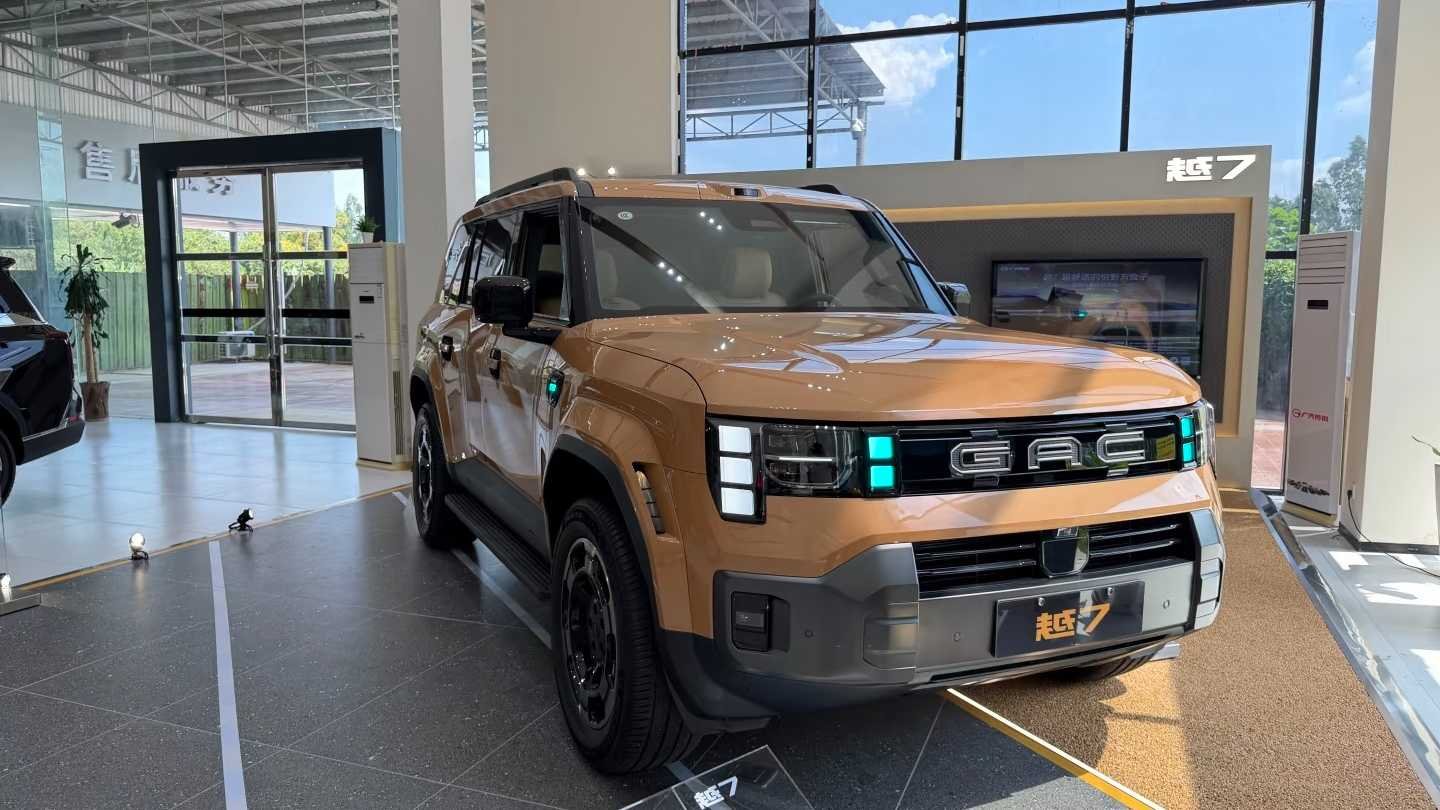
It's only been a few days since the Trumpchi Yue 7 started pre-sales, and orders have already exceeded 15,000 units. You'd think this would be a wave of praise, but in the comments section, the fiercest arguments aren't about price or features—it's about the fact that it doesn't have a ladder frame.
"No ladder frame and it still calls itself hardcore?" "Isn't this just a unibody with a new name?"
Another group immediately pushed back, bringing up the Pajero and Land Rover Defender: they use the same approach too.
Neither side can convince the other, and people looking to buy are getting more and more confused: is this car cutting costs, or is it genuinely optimized for family use?
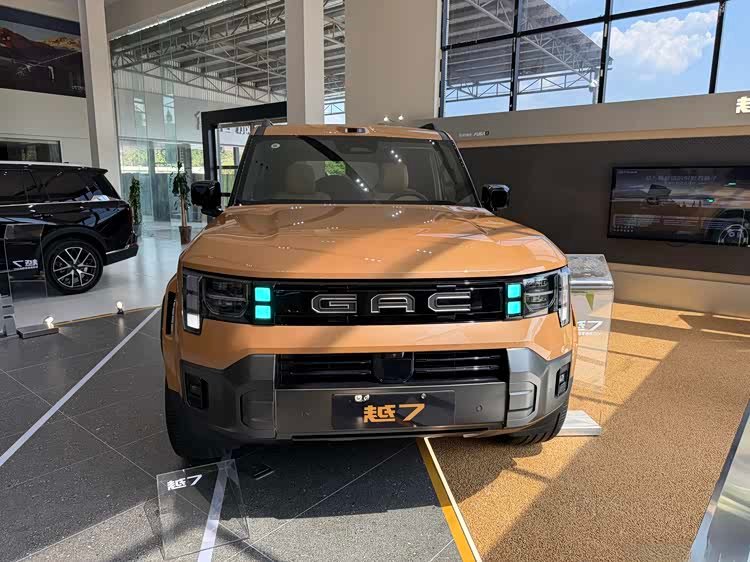
Don't rush to pick a side. Let me put it this way: the Yue 7 is not a traditional hardcore off-roader—it's a family car that "commutes 90% of the time and goes wild 10% of the time." Once you understand this, every design choice makes sense.
Today I won't talk about positions, just the product. Let's break down both body-on-frame approaches, the real product capability, and the limits of what it can do, to help people considering the Yue 7 figure out one thing: is this car actually right for you?
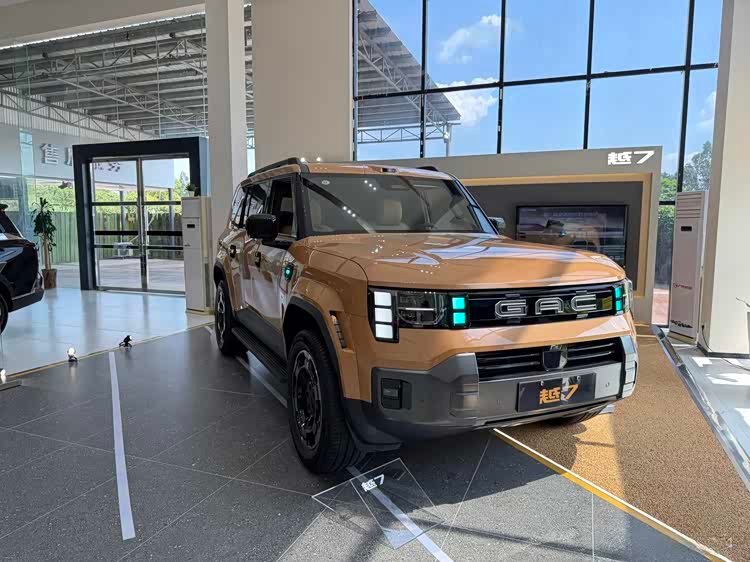
No ladder frame—is that really a feature trade-off?
Let's translate both body types into plain language.
Traditional hardcore vehicles use "body-on-frame": an independent steel skeleton is welded underneath the chassis, and the body sits on top like a house. The upside is durability—the body doesn't deform on extreme rough roads; the downside is it's heavy and tall, floats at highway speeds, and going over a speed bump gets you a "clang" followed by three more shakes.
The Yue 7 uses an embedded reinforced body, integrating the ladder frame into the body itself. Here's a way to remember it: a traditional ladder frame is "a room built on a steel frame," while the Yue 7 is "a house built directly with reinforced concrete"—most of the rigidity is retained, but the body is about 15% lighter with a lower center of gravity.
Official data: torsional rigidity of 38,000N·m/°, A-pillars using 2,200MPa hot-formed steel, and a roof that can withstand 12.2 tons. Among vehicles without a ladder frame, this foundation is quite impressive.
Trumpchi was clear-headed about this: I'm not competing on who's more hardcore—I want you to drive without suffering every day, and still be able to go out and have fun on weekends.
Count your friends who bought hardcore SUVs—how many times a year do they actually go off-roading? Most people are like "before buying, I imagine a hundred ways to use it; after buying, I actually go two or three times." The remaining 300-plus days are all commuting, picking up kids, and going to the mall. You're enduring the fuel consumption and bumpiness of a traditional ladder frame every day; the extreme off-road capability you might not use twice a year.
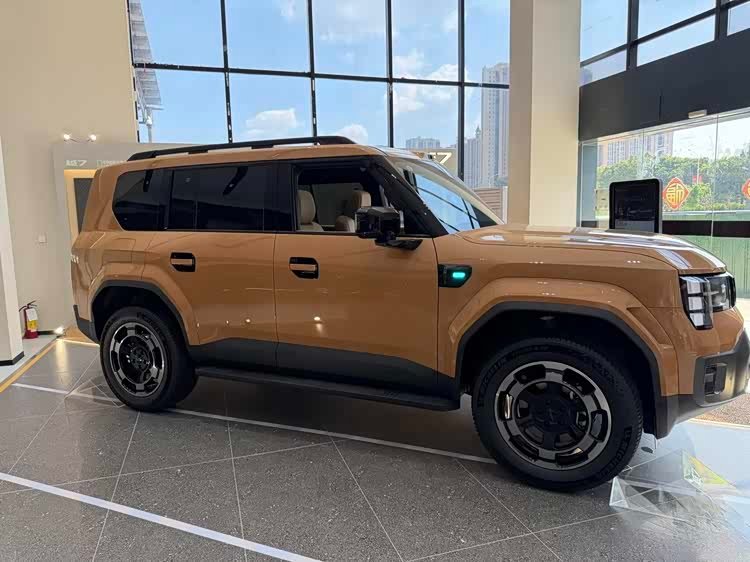
What makes it better than hardcore vehicles for city driving?
Morning rush drop-offs, grocery runs after work, weekend mall trips—that's the real battlefield for hardcore SUVs. And how traditional ladder-frame vehicles perform on this battlefield, anyone who's driven one knows: "thud thud" over speed bumps, constantly fighting the steering wheel on the highway, wind noise howling from the boxy shape, fuel consumption at 12-13L and climbing. This is determined by physics—no amount of tuning can fix it.
The Yue 7 integrates the ladder frame into the body, lowering the center of gravity, so the suspension can be tuned for comfort with confidence. Over the same speed bump where a ladder-frame vehicle goes "clang" and shakes three times, you just hear a soft thud; on the highway where others are constantly wrestling with the steering wheel, you can rest your hand on it and cruise steadily. This difference is only felt by those who drive it every day.
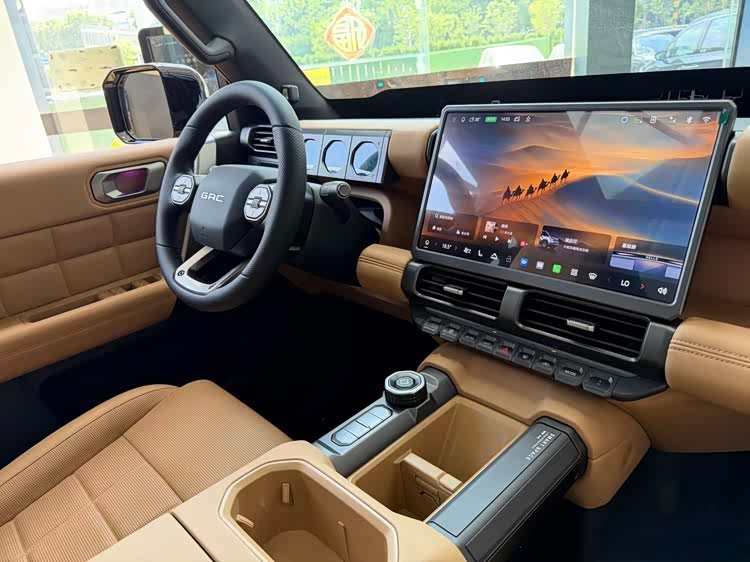
Energy consumption needs no elaboration. 1.5T plug-in hybrid, pure electric range up to 261km, combined range up to 1,352km. If you have a home charger, daily commuting is basically all-electric, under 0.1 yuan per kilometer. Compared to traditional hardcore vehicles guzzling 12-15L of fuel, the structural advantage of plug-in hybrid plus lightweighting isn't achieved by "skimping." On real long trips, the 1,352km combined range is enough to drive from the city all the way to your hometown without stopping at service areas to queue for charging.
As for the cabin, Trumpchi's MPV expertise wasn't wasted. A 1.1-meter panoramic screen plus a 15.6-inch central display, with smoothness close to a tablet.
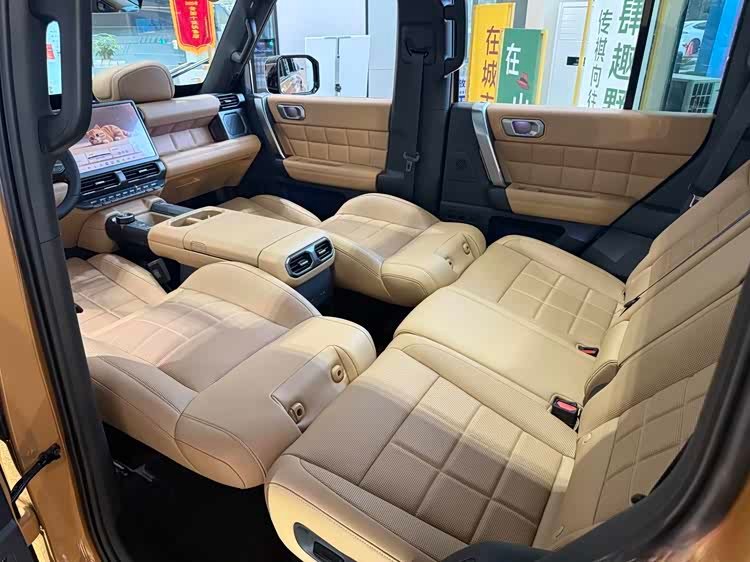
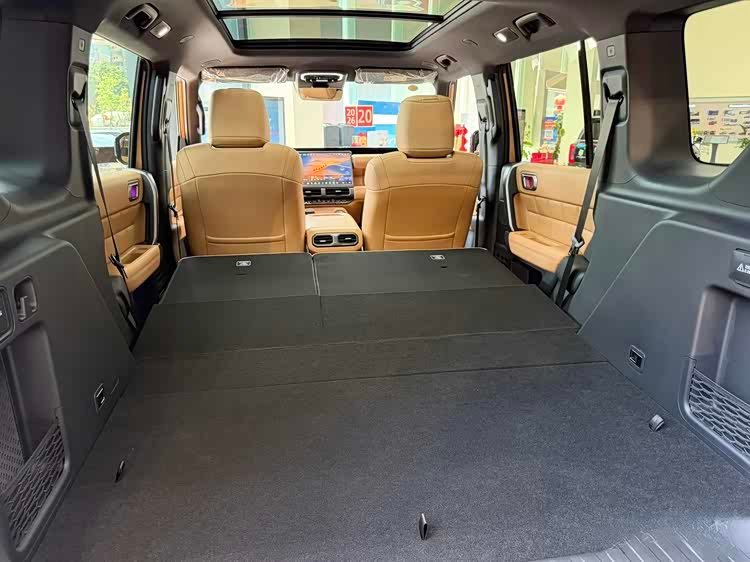
The second row is where the Yue 7 really shines. 170mm electric sliding rails plus 127° backrest adjustment—even lying flat, your legs and knees still have support; fold down the armrests and you get two "quasi-captain's chairs." Fold them down further and you get a 1.9-meter flat bed—just throw down a mat when camping and sleep directly, far less hassle than pitching a tent. What does an 81% space utilization rate mean? The similarly sized Fangchengbao Tai 7 only achieves 70.9%.
If you really do go out and get wild, how far can it go?
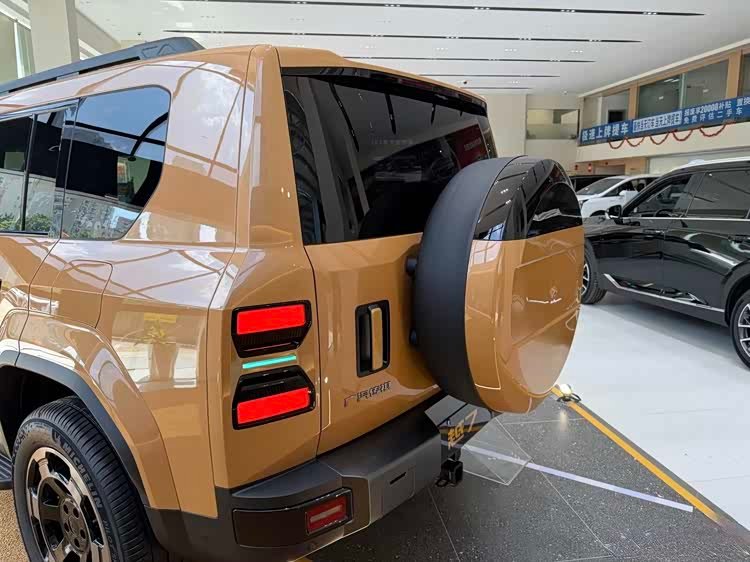
No ladder frame doesn't mean off-road capability is lacking. The Yue 7's hardware is fully loaded: the 4WD version comes standard with a rear axle differential lock plus a central energy lock, and the optional off-road package adds a front axle differential lock for a total of three locks, paired with a 9+X all-terrain mode; ground clearance of 310mm unloaded, approach angle of 30°, departure angle of 33°, wading depth of 780mm. For family light off-road scenarios like cross-axle terrain, shell craters, dirt road traversals, and riverbank camping, both recovery capability and body rigidity hold up. On unpaved surfaces, the body feels very solid with no loose rattles, and lock engagement is quick—recovery is clean and decisive. AI all-terrain automatically identifies mud, sand, and rock, adjusting locks and power automatically—beginners don't need to memorize operations, just get in and go.
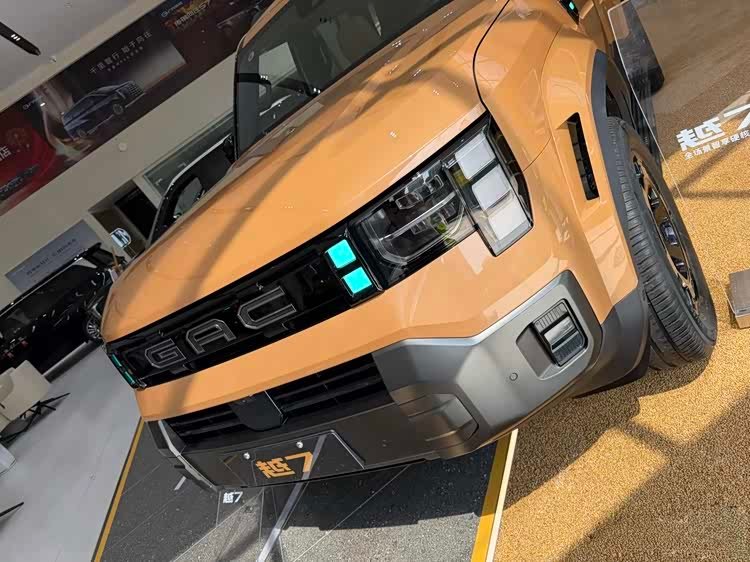
But the limits need to be clear: the embedded ladder frame's ceiling is indeed lower than traditional body-on-frame. If you're a serious enthusiast doing daily rock crawling and long-distance high-intensity traversals, the Yue 7 isn't for you—you'd want to look at the Tank 400/500. The Yue 7's positioning is clear—daily comfort plus weekend fun, which is enough for 90% of users.
One more easily overlooked point: off-roading risks scraping the underbody and damaging the battery. The Yue 7's chassis is fitted with 1,300MPa hot-formed steel skid plates, and the battery has 9 layers of protection—this targeted treatment is very well done. The vehicle has 37 factory modification interfaces and 200 modification parts—roof tents, side awnings, and roof racks can be installed directly without touching the original wiring, and no worries about annual inspections.
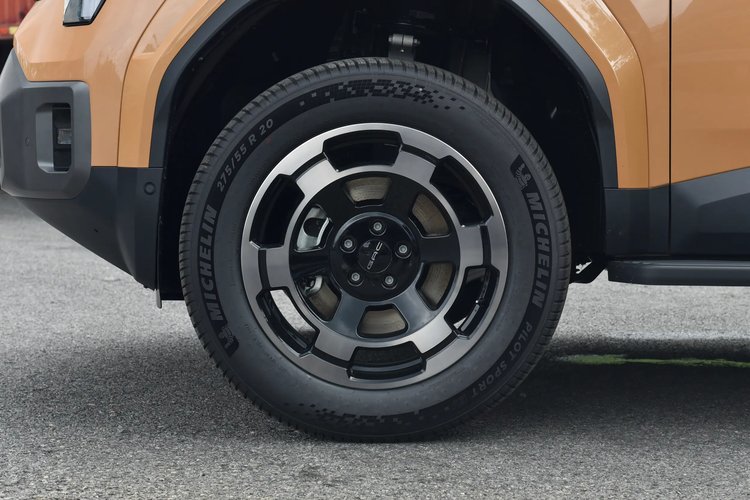
Safety and outdoor ecosystem—two bonus points
The embedded body isn't just about comfort—it directly benefits safety too. With the body and ladder frame integrated, the crash force transmission path is more complete; A-pillars with 2,200MPa hot-formed steel and a roof rated for 12.2 tons are life-saving metrics in extreme scenarios like rollovers. The Yue 7 also passed a 46-meter rollover test and extreme high-temperature endurance testing—this level of validation is rare among SUVs at this price point.
Battery safety is even more critical. Chassis impacts are a common off-road risk; the Yue 7's 1,300MPa hot-formed steel skid plate at the bottom plus 9 layers of battery protection—when bringing family along, battery safety may weigh more heavily than off-road performance.
For camping, dual 220V external power outlets are very practical. Find a riverbank on the weekend, park the car, plug in a grill and projector, and let the kids roll around on the big bed spread out in the trunk—this picture is the real reason most families buy it. "Can go, can stay, can play"—one car covers it all.
Four versions—here's how to choose
Just four versions, pre-sale benefit prices from 171,800 to 217,800 yuan, and ordering now also gets you benefits worth up to 28,000 yuan. Just match to your needs.
2WD Pro (171,800 yuan) and 2WD Max (187,800 yuan) | City family use primarily, limited budget
Sufficient for daily driving, commuting, and camping. The Pro has a 28.3kWh battery with 161km pure electric range; the Max has a 46kWh battery with 261km pure electric range. If you're not doing heavy off-roading, these two offer good value.
4WD Max (207,800 yuan) | Clear off-road needs, not chasing air suspension—highly recommended
Rear axle differential lock plus central energy lock plus all-terrain plus 4WD—all included, core off-road capability uncompromised, saving on the air suspension premium, and easier maintenance down the road. For 90% of light off-road enthusiasts, this is the smart choice. The money saved can go toward the off-road package (front differential lock plus aviation-style toggle switches plus recovery tow kit, valued at 7,999 yuan).
4WD Ultra (217,800 yuan) | Pursuing top-tier quality and driver assistance
Dual-chamber air suspension plus CDC plus 192-line lidar plus urban/highway NDA—chassis comfort and capability maxed out. Only 10,000 yuan more than the Max, and you get a lot: adjustable suspension height and firmness, urban driver assistance, ENC active noise cancellation, genuine leather seats. If you plan to keep it long-term and want the all-around experience, it's worth the upgrade.
Final thoughts
Ultimately, the Yue 7 abandoning the traditional ladder frame isn't lowering standards—it's a scenario-based trade-off tailored to family users. It didn't sacrifice daily comfort for the "hardcore" label; instead, it blends the economy of a plug-in hybrid, the capability of a boxy SUV, and MPV-level space into a "city-and-wild" SUV that ordinary families genuinely find comfortable to use.
For most people, you don't need to pay for extreme off-road capability you'll use less than twice a year—being easy to drive daily, fuel-efficient, and comfortable is real product strength. With 15,000 pre-sale orders, the market has already voted with its feet. Of course, Trumpchi's brand heritage in hardcore off-roading genuinely lags behind Tank and Fangchengbao—that's something that takes time to build. But the direction is right, and the product capability is there. Next, it's about official pricing and word-of-mouth after delivery.
If it were you, would you choose the embedded body that's "comfortable on road plus capable enough for light off-roading," or the traditional ladder frame that's "strong for extreme off-roading but suffers daily"? Sound off in the comments about your choice.


