When people used to mention AION, the word that most often popped into their heads was probably "ride-hailing car." True enough—the previously high fleet presence of AION S and AION Y in the B-end market precisely confirmed the underlying strengths of AION products: tough, durable, and highly cost-effective. However, after a series of systemic renewal moves—including the Hyper AION BU system reform, a comprehensive refresh of both brands, product iteration and upgrading, and all-domain user operations—the brand has undergone a complete transformation: C-end private users have become the core support for sales, achieving sustained and steady upward growth.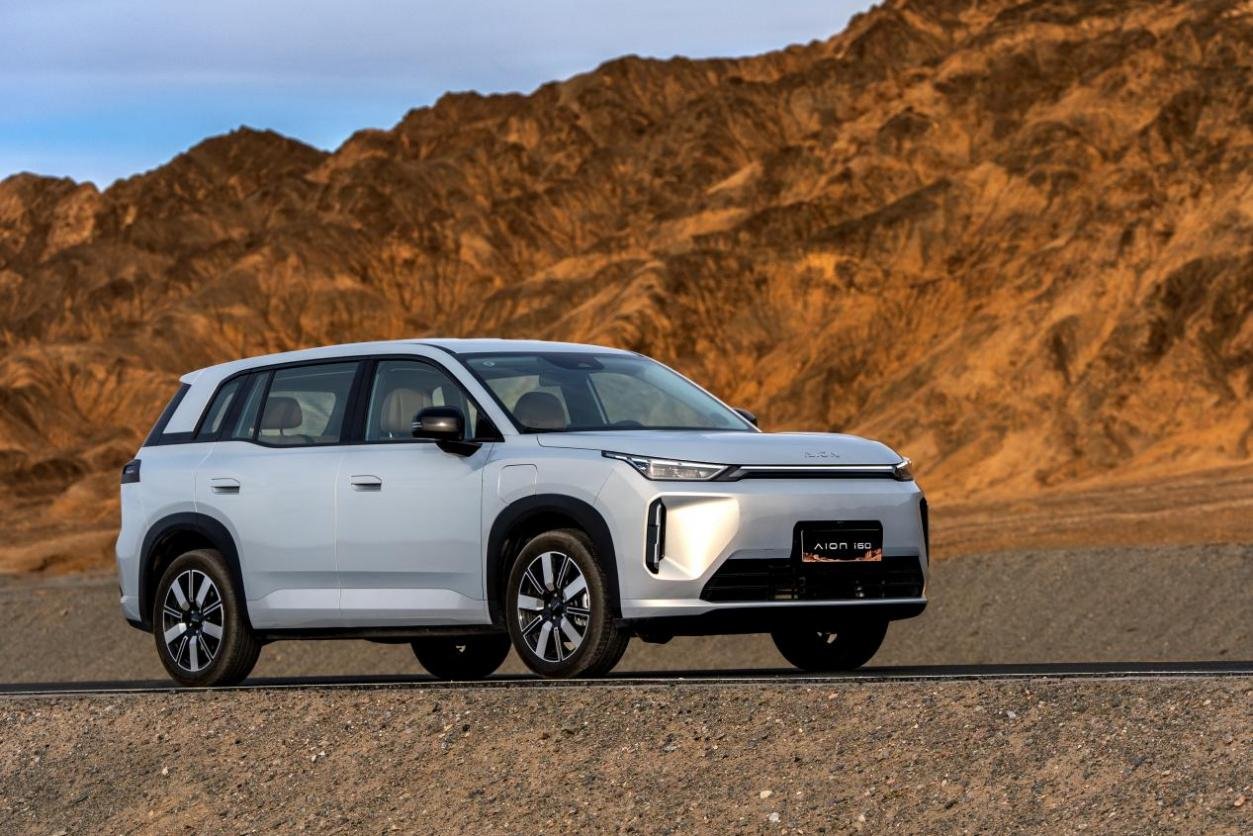
Relevant data shows that in July, Hyper AION BU terminal sales reached 34,987 units, up 31.74% year-on-year and 3.87% month-on-month, and achieved five consecutive months of double-digit year-on-year growth, with C-end users accounting for 81%.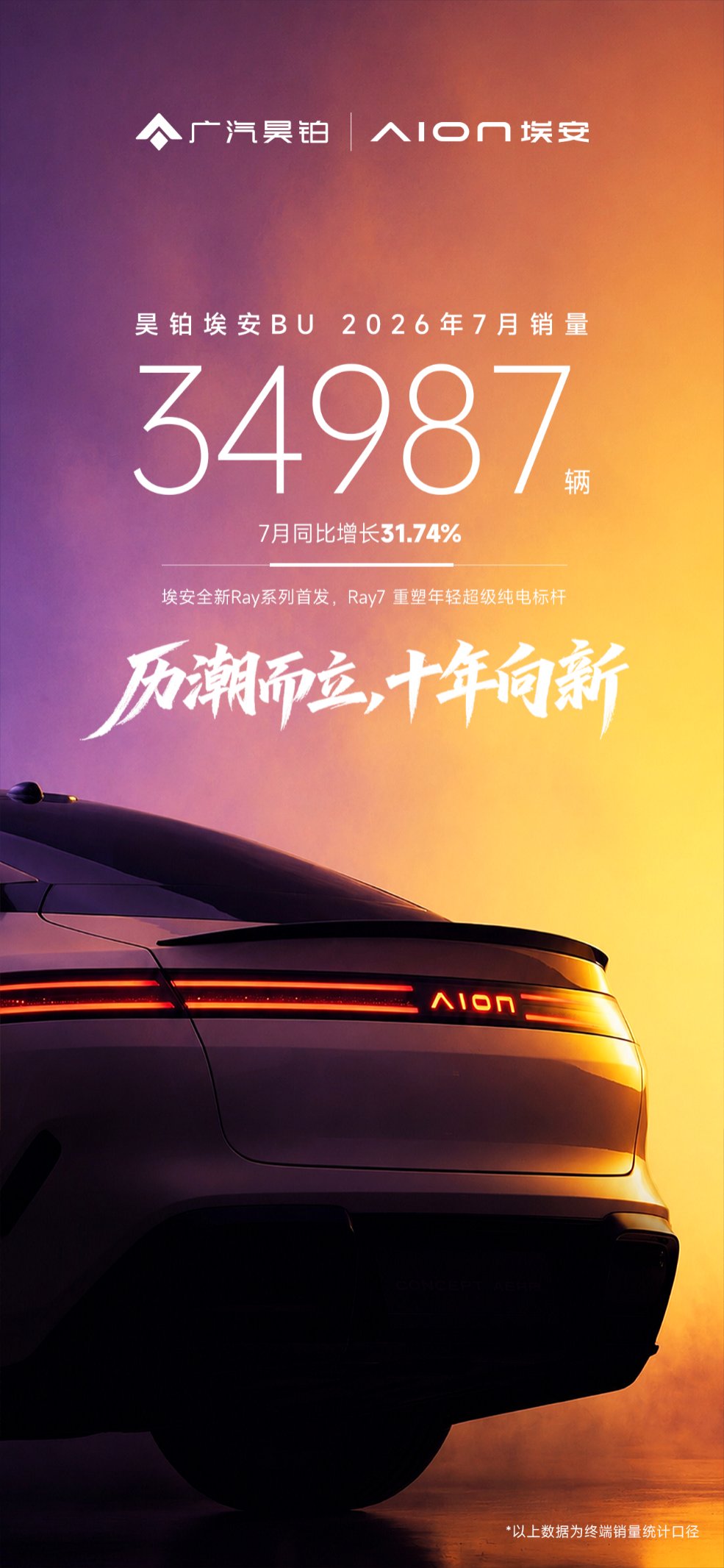
It is worth noting that the sales share of models such as AION Y and AION S has continued to decline, with total sales in June already less than 3,000 units; while models such as AION i60, N60, UT, and RT have become the main sales force. From this sales data, it can also be seen that the C-end products launched through the brand's transformation have gained recognition from private users.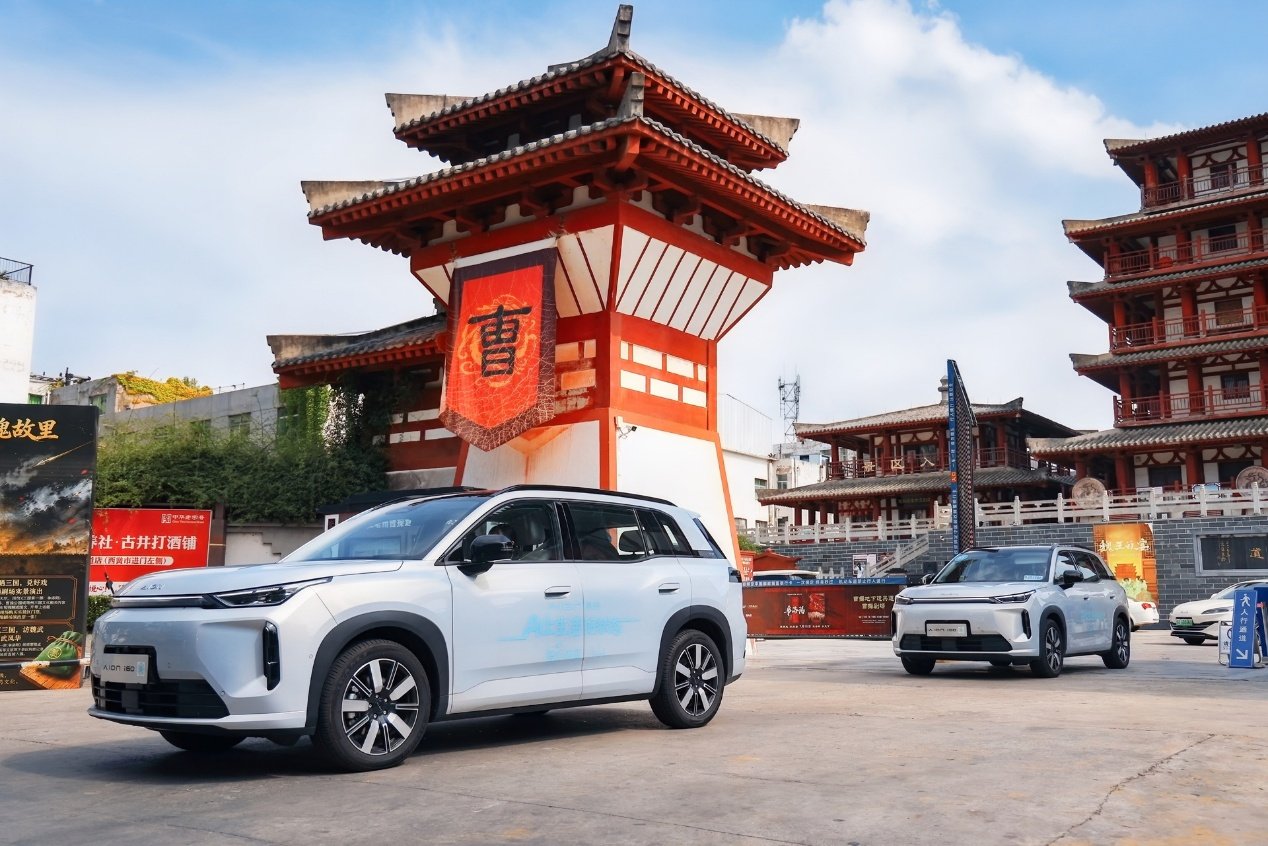
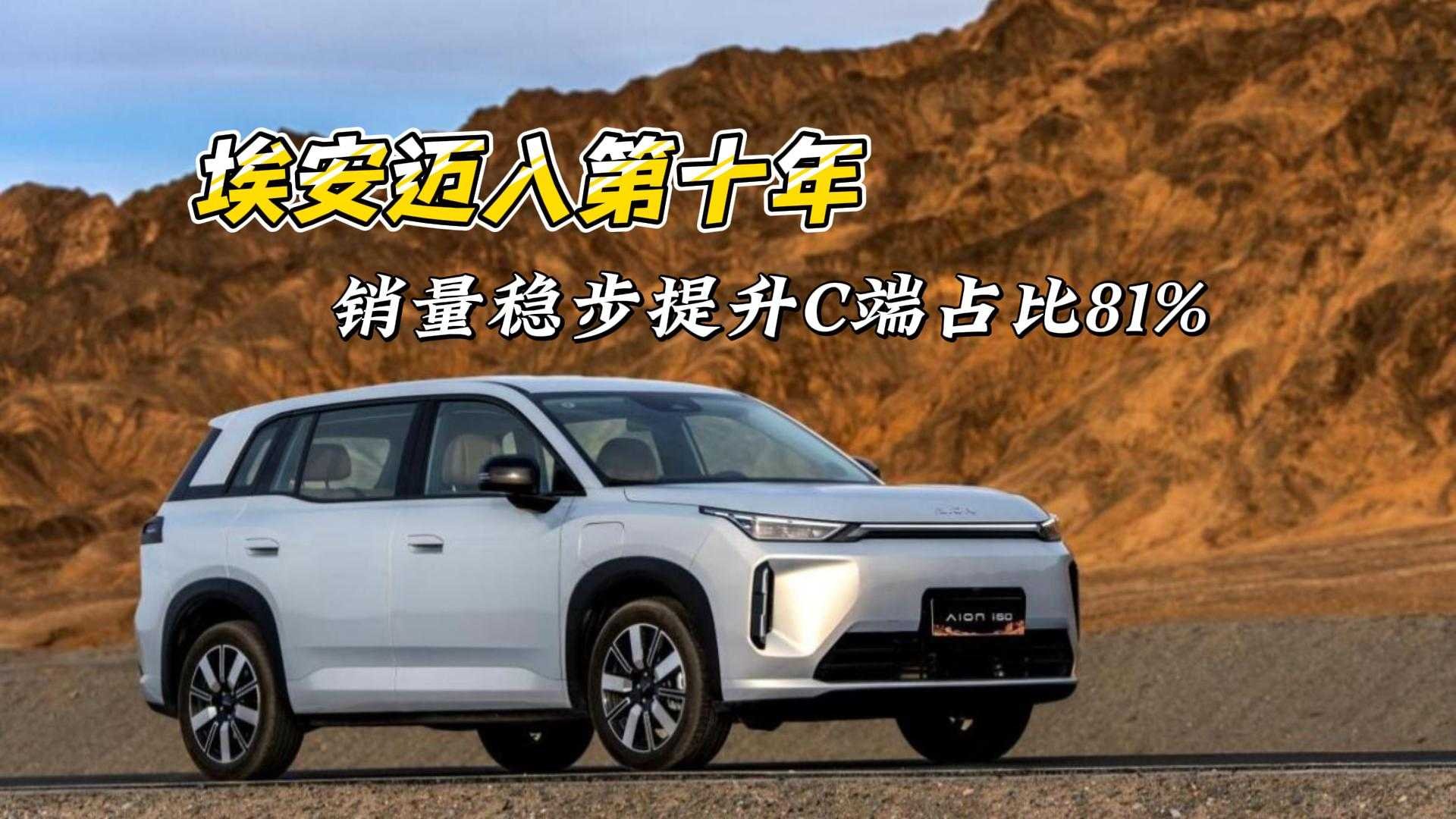
Take the AION i60 and AION N60 as examples. The former, as the A-class new energy SUV that best understands Chinese families, has users aged 26-35 accounting for 42%, with monthly sales steadily exceeding 10,000. The latter brings L4-equivalent lidar intelligent driving down to the 100,000-150,000 yuan class, becoming the first choice for the 25-35 young group, whose share reaches 79.8%, ranking first in sales in its segment.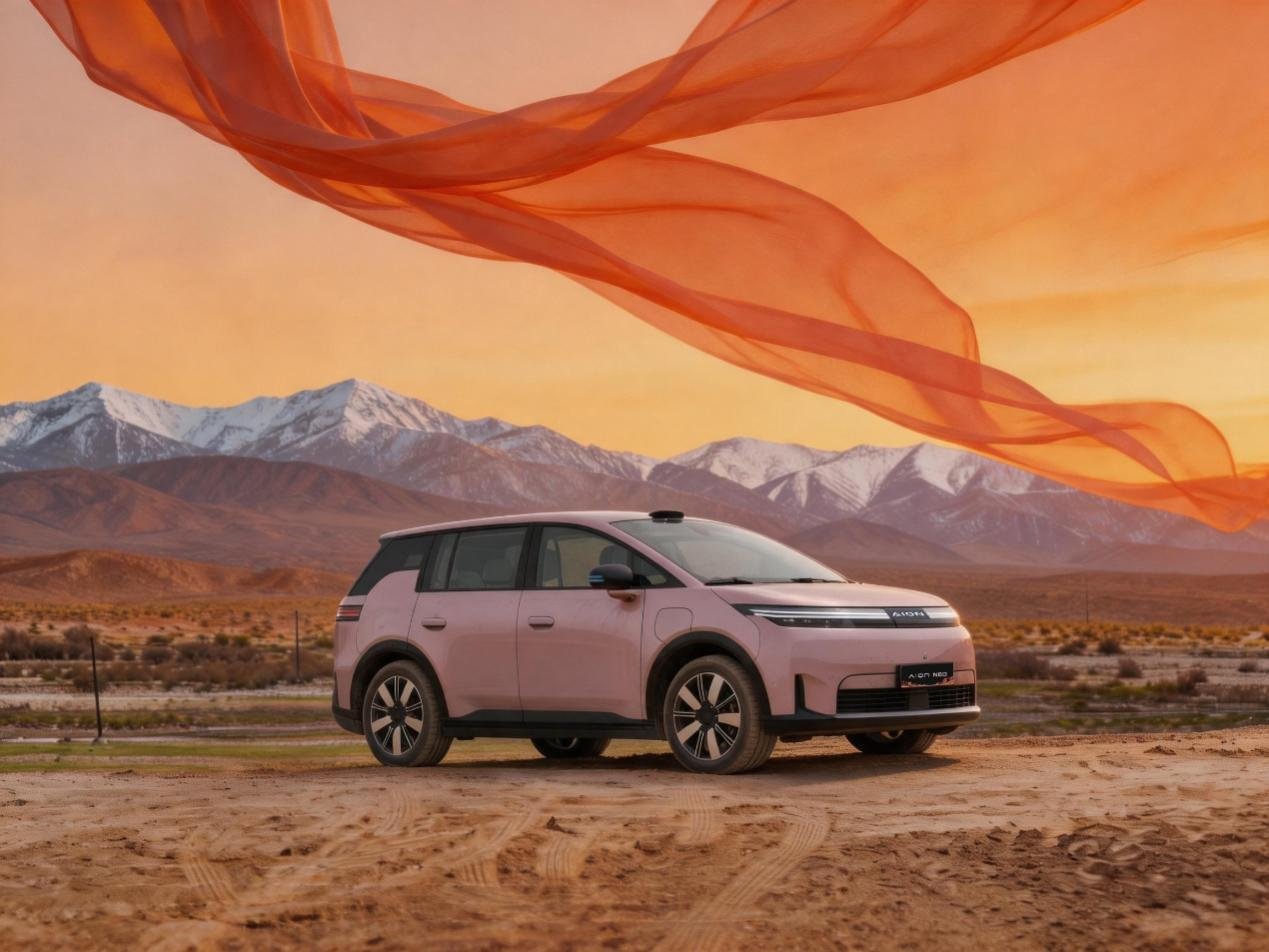
In today's auto market, using the word "fierce competition" to describe it is not enough. It can be said that companies are fighting each other with bayonets drawn, so product homogenization is very serious, causing consumers to experience aesthetic fatigue. New energy has also entered an elimination round, and new energy brands that can survive for ten years are few and far between.
Everyone also knows that young people have now become the core consumer group for new energy vehicles. They pursue both cutting-edge hardcore technology and personalized emotional value. The saying "the second half of new energy depends on young people" is fully consistent with the current auto consumer market.
Going back to July 28, the AION brand officially entered its tenth year. On that day, AION released the all-new Ray vehicle series aimed at young people. Ray means light, emphasizing a free, vibrant, and youthful attitude toward life. The new series directly enters the heart of the pure electric coupe segment, completes the brand's youthful product matrix, proactively opens a second growth curve, and finds a new incremental breakthrough amid the industry's stock-market involution.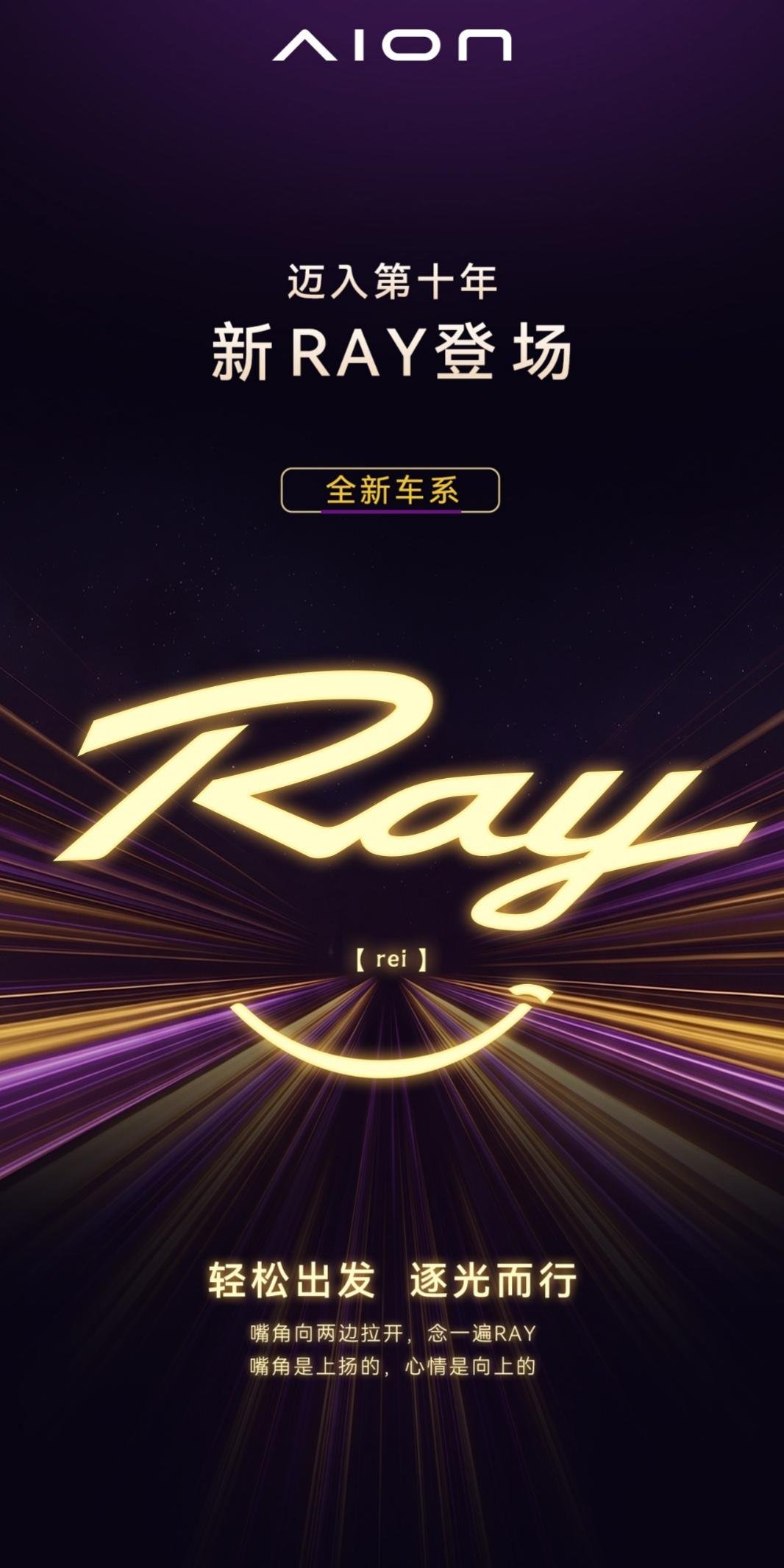
Its first model, the Ray 7, also made its official debut, adopting the new vehicle series, new LOGO, and new technology, positioned as a "mid-to-large super pure electric sedan." The new car has a 5-meter-class body, a low-slung wide-body stance, and a streamlined, stretched profile that can make people fall in love at first sight.
It adopts the world's first super chassis with a chip-level drive-control integration architecture, enabling a more stable driving and control experience. It is also equipped with CATL batteries, features magazine battery technology, and has ultra-low energy consumption thanks to an industry-leading vehicle energy management system. At the same time, it is equipped with an L4-level same-origin algorithm lidar-assisted driving system. It can be said that the Ray 7 is young people's super pure electric!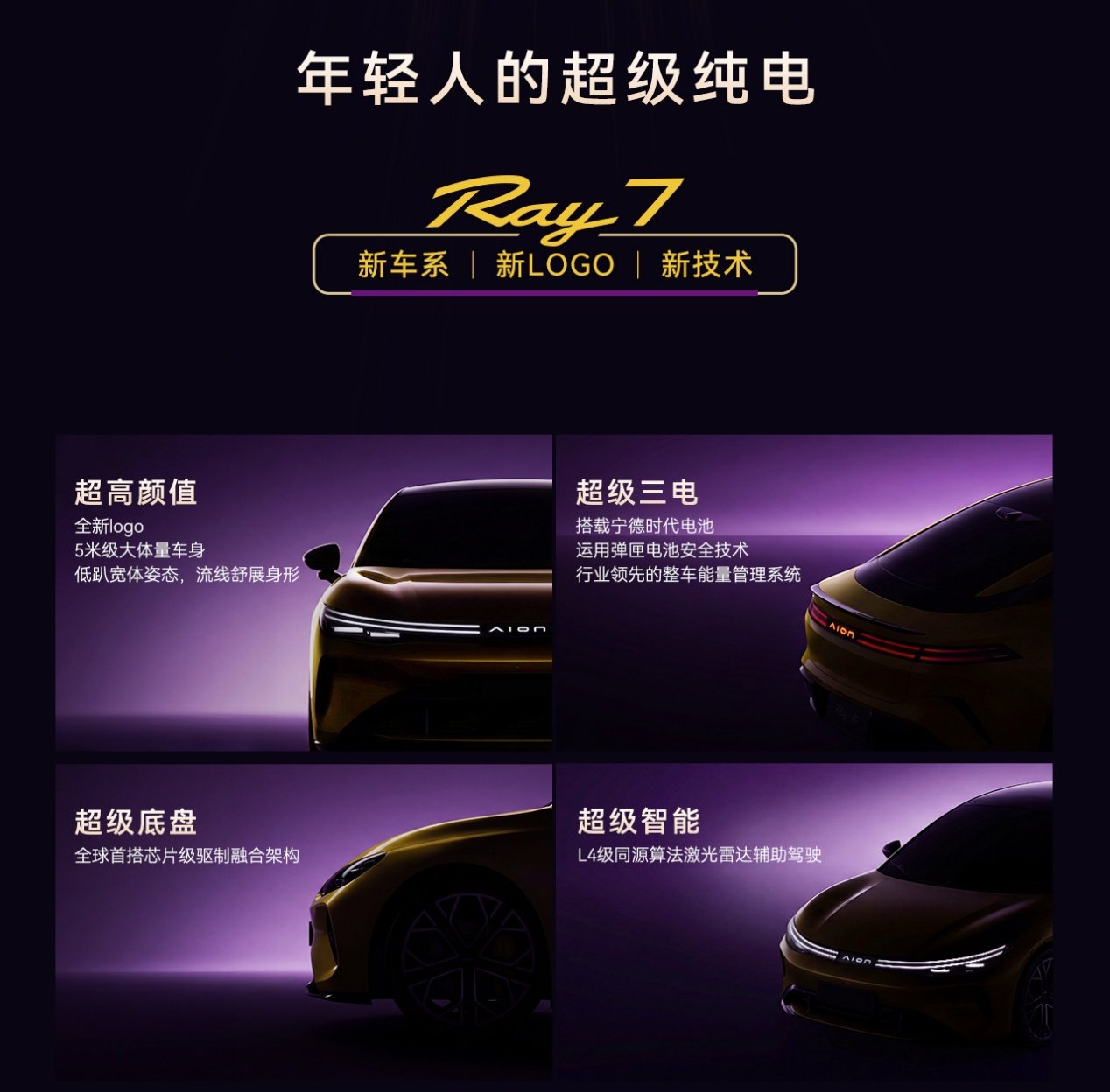
Not only AION is closely watching young people's needs and aesthetics and launching new products into this segment; other brands are in fact also fiercely attacking the same piece of cake. But what is visible to the naked eye is that in the current environment of involution and price wars in the industry, most brands take shortcuts in "youthfulness"—cutting intelligent driving, shrinking the three electric systems, lowering materials, and exchanging reduced specs for low prices, turning youthfulness into a vicious cycle of "cheap = just make do." For us consumers, this is a "pit."
But AION's youthful transformation is not just as superficial as changing the front face or coming up with a trendy car color. Behind it is the full-stack self-developed foundation accumulated over many years in the three electric systems, intelligent driving, and vehicle manufacturing, plus the scale effect brought by millions of users, gradually diluting R&D and manufacturing costs, and forcibly building technical barriers in the red ocean of cost that others cannot copy. The result is that high-end configurations originally available only at 300,000+ yuan—such as lidar, efficient electric drive, and long-range three electric systems—have been brought down by AION all the way to the mainstream 100,000-150,000 yuan price range, truly putting "universal access to high-end technology" into practice and incidentally resolving the industry's chronic problem that "youthfulness = reduced specs." The product competitiveness brought by this approach is almost irreplaceable, and it can also support the brand's confidence in long-term steady upward growth.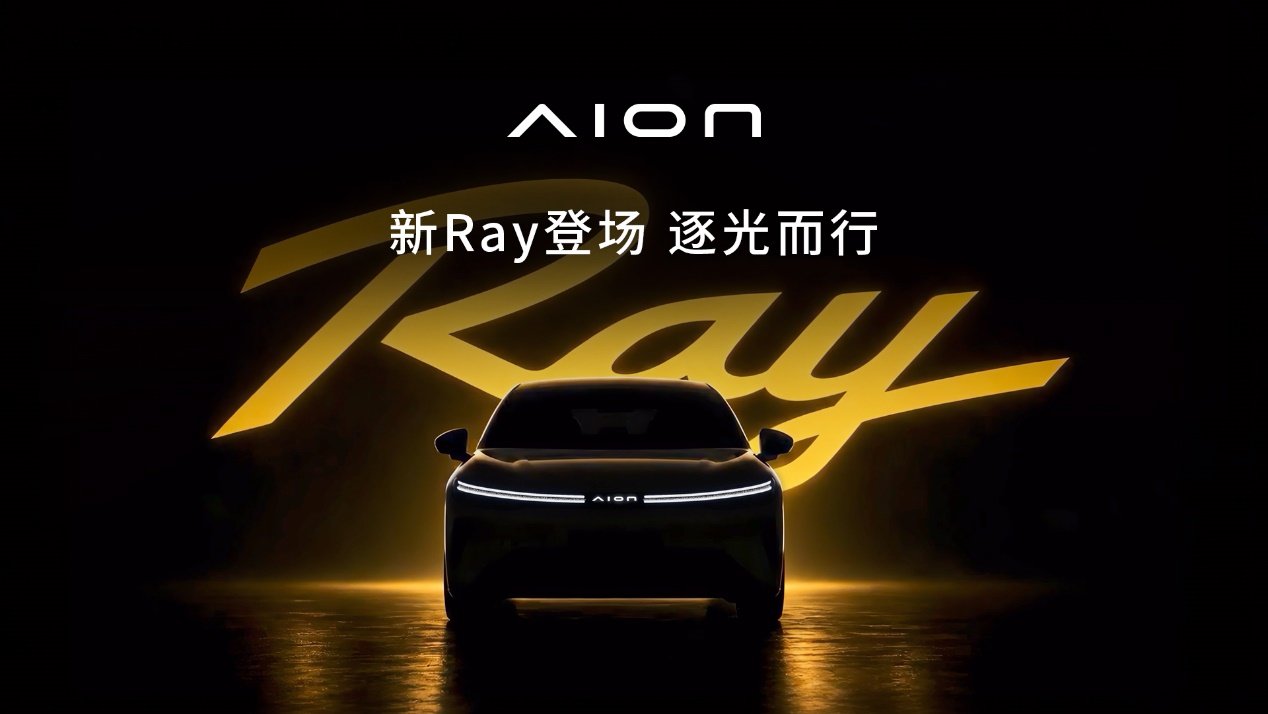
As the saying goes, "An enterprise without foresight cannot go far." AION used nine years to build momentum and create a foundation for long-term development; it built a 100-billion-level industrial chain covering core three electric systems, intelligent connectivity, and other fields. This gave it core technologies such as new energy vehicle lighthouse factories, a dedicated pure electric platform, magazine batteries, and Quark electric drive; and it has achieved L2-L4 technology coverage in the field of intelligent driving. It is precisely with this accumulation of technology that AION has sufficient momentum to pass through industry cycles and maintain high-quality development through many stages such as subsidy declines, soaring battery costs, and price wars, and further stand out in round after round of industry elimination.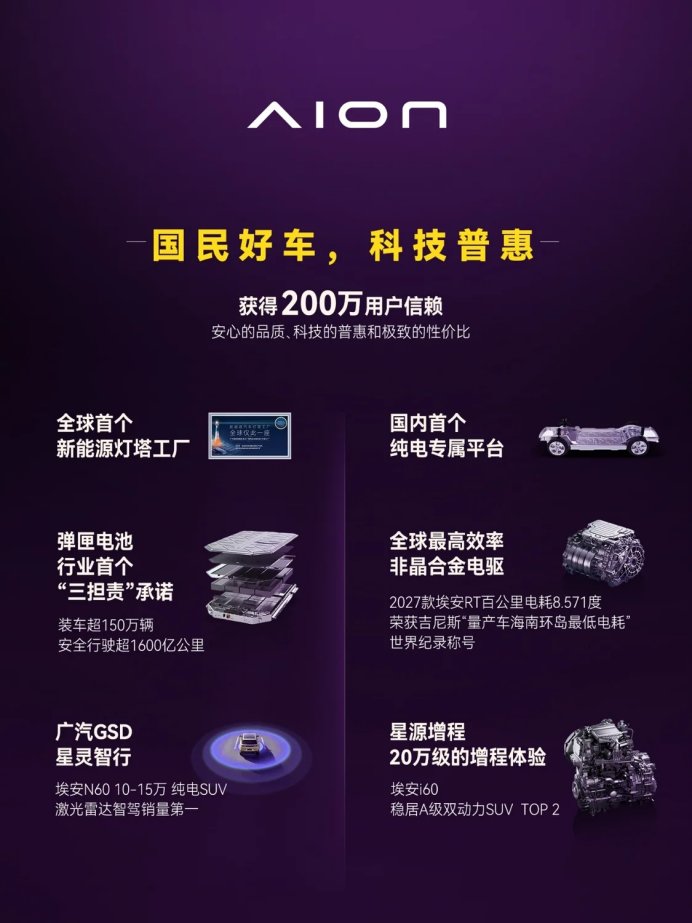
In addition, GAC AION relies on the group's "Panyu Action" to implement the IPD/IPMS system and improve channel integration efficiency. In products, it insists on technology universalization; in services, it launched "lifetime warranty for the three electric systems + three responsibilities." This gives our users a car-owning experience that is worry-free to buy and reassuring to use.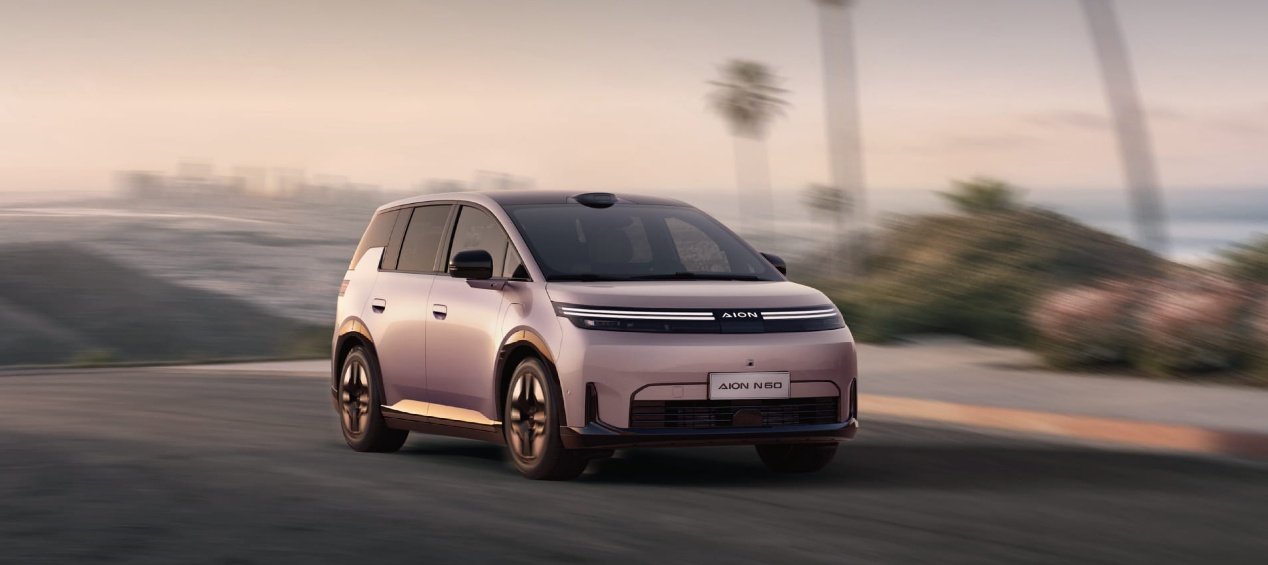
Conclusion:
As the AION brand enters its tenth year, it has won the favor of 2 million users in total, enough to prove the market's and users' recognition of it. This year is precisely the decisive year for AION's transformation. From the sales data, AION has already gained purchases from a large number of C-end users. That old label of "ride-hailing car" once stuck to it has been truly torn off. This represents that the brand has successfully passed through the industry cycle and entered a new stage of steady growth, and this long-term steady operating foundation allows us consumers to buy with confidence and use with peace of mind.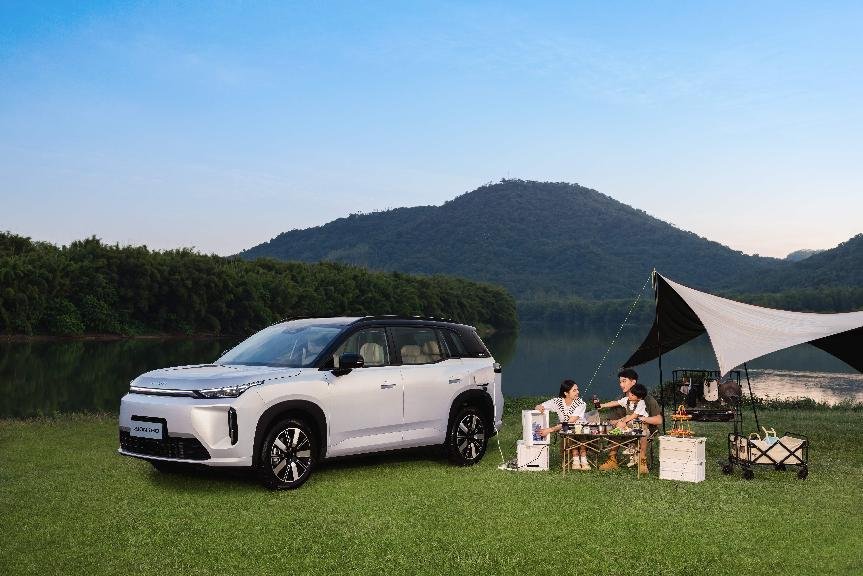
From the product perspective, AION's two hit models, the i60 and N60, have already proven themselves with sales and are deeply loved by users; while the launch of the all-new Ray vehicle series, achieving technology universalization through full-stack self-development and resolving the pain point of reduced specs in youth-oriented products, can further capture young people's car-use needs.
Aion enters its tenth year, sales steadily rise with C-end accounting for 81%
Related Stories

kmautoBANG
Starting at 92,900 yuan, Geely's fourth-generation Boyue L launches in Kunming with first batch of user deliveries

shishiche
Tesla Q3 in One Earnings Report: Steady Delivery Growth, Robotaxi, Energy Storage, and Robotics All Accelerating

ZhidianDaV
More off-road than family cars, smarter than off-roaders, M-Hero X700 arrives, limited-time starting at 209,800 yuan