
On March 19 in Shenzhen, the Huawei China Partner Conference 2026 arrived as promised. This industry gala brought together government and enterprise elites and partners from all over the country to jointly discuss how, under the impact of the AI tide in the intelligent era, Huawei and its partners should grasp the vast market prospects, respond to enormous challenges, and work together to create a brilliant future.
For Huawei and its partners, "Partners + Huawei" is not a slogan, but the key to breaking through in the digital and intelligent transformation of government and enterprise in the AI era.
The Impact of the AI Tide in the Intelligent Era: Opportunities and Challenges for Government and Enterprise Business
With the rapid development of artificial intelligence technology, AI is no longer a concept of the future, but is reconstructing the industry ecosystem and reshaping people's work and life. From manufacturing to finance, from healthcare to smart cities, AI application scenarios are constantly expanding, while also bringing unprecedented development opportunities to government and enterprise business.
Research reports from IDC and Gartner show that by 2027, more than 90% of enterprises will pay more attention to the impact brought by AI, among which 50% of large enterprises will use AI in at least one core link. By 2028, 15% of daily work decisions will be completed by AI, and AI will move from "answering questions" to "executing tasks," and directly intervene in production systems. Future AI will no longer be merely a tool, but will gradually move toward a closed-loop "worker" that perceives, understands, thinks, decides, executes, evaluates, and then perceives again.
This year's "Two Sessions" pointed out that by 2030, AI will drive 10 trillion in related industry development space, of which AI hardware, software, and services directly related to China's enterprise market will exceed 1 trillion. In terms of the computing power industry alone, from 2020 to 2030, general computing power will increase 10-fold, and artificial intelligence computing power will increase 4,000-fold.
Such an era of "large increments" is undoubtedly a huge opportunity for Huawei's government and enterprise business and its partners. However, at the same time, opportunities are often accompanied by challenges.
The complexity and rapid iteration of AI technology require government and enterprise customers to possess strong technological absorption and innovation capabilities; at the same time, data security and privacy protection issues have become increasingly prominent, becoming important factors restricting AI applications. In addition, how to build an organizational structure and business processes adapted to the AI era is also an important issue that government and enterprise customers need to face.
Facing these challenges, Huawei China Government and Enterprise Business is well aware that it is difficult to respond by fighting alone. Only by joining hands with a broad range of partners to jointly explore the path of digital and intelligent transformation in the AI era can it seize opportunities and meet challenges.
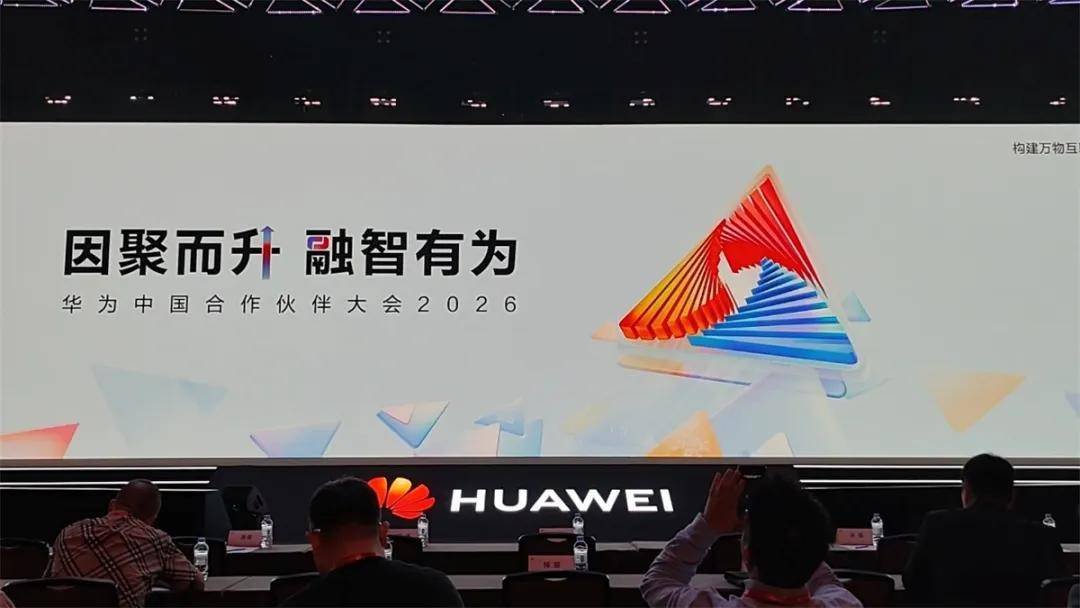
Brilliant 2025: Huawei's Win-Win Path with Partners
Wu Hui, President of Huawei China Government and Enterprise Business, revealed that in 2025, the revenue scale of Huawei China Government and Enterprise Business exceeded the 100 billion mark for the first time, achieving a leap from 3.7 billion to 100 billion over 15 years. Among this, the performance of government and enterprise partners exceeded 80 billion. Behind these brilliant achievements is inseparable from the strong support and joint efforts of a broad range of partners.
Wu Hui stated that Huawei China Government and Enterprise Business will continue to strengthen the partner system under the guidance of the "Four Beams and Six Pillars" strategy, gather like-minded people, and jointly develop new opportunities facing the AI era. Over the past year, Huawei newly developed more than 290 outstanding Diamond, Gold, and Silver partners, invested more than 10 billion in various incentives and inputs for partners, and for the first time invested more than 2,000 personnel. At the same time, Huawei has continued to strengthen order management, build a digital and intelligent operation platform, and improve customer satisfaction and partner health.
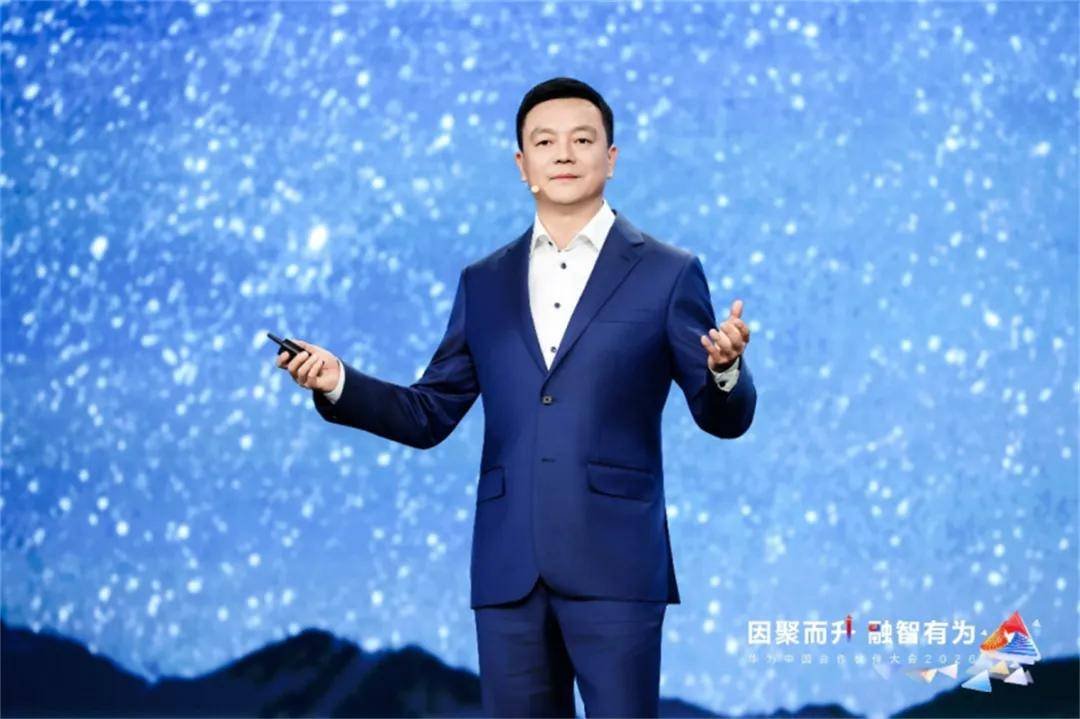
[Wu Hui, President of Huawei China Government and Enterprise Business]
The Great AI Era: Division of Labor and Collaboration Between Huawei and Partners
China has more than 520,000 large-scale enterprises, while Huawei and its partners currently directly serve fewer than 30,000 customers. This means that the digital and intelligent service market for nearly 500,000 customers still urgently needs to be explored. So, in the face of such a huge market, what should Huawei do? And what do partners need to do?
What should Huawei do? Huawei will focus on the needs of top industry customers, build digital and intelligent lighthouse projects, and work with partners to innovate through opportunity insight, scenario selection, joint innovation, and setting benchmarks, leading the intelligent development of the industry.
In building scenario-based solutions, Huawei will focus on 8 industries, 48 sub-industries, and more than 200 segmented scenarios, starting from modules such as distributed innovation, AI investment research assistants, R&D toolchains, smart factories, and large-enterprise warehousing and logistics, to form replicable solutions and bring them to market. Among these, for the NA market, it will deeply cultivate 165 value scenarios and jointly build common solutions with partners to lead industry intelligence; for the commercial market, it will build 10+95+N baseline solutions and marketable products; for the distribution market, it will build 4+10+N scenario-based solutions, do a good job in scenario innovation, and achieve differentiated competition.
What do partners need to do? Partners need to advance from L1-L2 product sales capabilities to L3-L5 capabilities such as business cloudification, data lake ingestion, data governance + AI, and consulting planning.
By building a computing dealer system, Huawei will introduce its eight major system capabilities—managing customer relationships, managing partner relationships, managing marketing, managing sales, managing products and solutions, delivery and service, managing authorization and exercise of rights, and managing the contract lifecycle—to 15 computing OEM partners, and together with these 15 OEM partners empower N dealers, namely "1+15+N," enabling dealers to possess computing planning capabilities, FAE ecosystem adaptation capabilities, model tuning capabilities, and also AI data governance and AI operations and maintenance capabilities, so that ultimately all dealer partner systems can win together in the huge computing power market.
Detailed Interpretation of China's Government and Enterprise Partner Policy for 2026
As the highlight of this conference, Xu Chao, Vice President of Huawei China Government and Enterprise Business, provided a comprehensive explanation and in-depth interpretation of the 2026 China government and enterprise partner policy. He stated that in 2026, Huawei's partner policy will be upgraded around four aspects of "1234":
1. One Persistence: A customer-centric "Partners + Huawei" system
Huawei will continue to unswervingly adhere to a "customer-centric" partner system, and through a win-win partnership among customers, Huawei, and partners, achieve the goals of sustained customer satisfaction, partners having profit and being able to grow, and Huawei achieving quality growth. At the same time, Huawei will also focus on high-quality partners, tilt resources, empower and support them to expand business along industries, and form an inverted-triangle partner structure.
2. Two Upgrades: Partner capability upgrade and partner incentive upgrade
In terms of partner capability upgrade, Huawei will improve partners' industry capabilities, industrial capabilities, and service capabilities. By splitting sub-industry legions, it will create solutions from L3 to L5; develop a computing dealer system to improve partners' computing sales capabilities; expand authorization and support, share existing opportunities, and enable partners to provide consistent services.
In terms of partner incentive upgrade, Huawei will introduce the Partner Growth Index (PGI) to motivate partners to improve comprehensive capabilities. PGI will conduct comprehensive evaluation around dimensions such as performance structure, performance growth rate, service capability, and industry solution capability, and will invest high-quality incentive resources in partners that develop faster.
3. Three Developments: Joint development of NA, commercial, and distribution markets
In the NA market, Huawei hopes to gather capability-oriented partners to jointly create comprehensive solutions and do deep work on the customer side. Huawei will use the partner map as the first priority, as well as partners' long-term investment on the customer side, as the criteria for selecting partners in NA, jointly formulate expansion strategies with partners along industries and around customers, and will fully roll out industry alliance partners to all sub-industries with system departments.
In the commercial market, Huawei will firmly adhere to the principle of supporting partners in serving customers well and continuously constrain boundaries. Through the 10+95+N scenario-based solutions and marketable product launch plans, Huawei will focus on 10 core industries such as government affairs, education, healthcare, energy, and transportation, focus on 95 segmented scenarios, continuously iterate N marketable products, invest real money into partners' business activities, help partners reduce costs and increase efficiency, promptly share obtained market leads with partners, and enable partners to achieve the "five autonomies" of independent quotation, independent bidding, independent ordering, independent delivery, and independent maintenance.
In the distribution market, with engineering contractors as the center, develop high-quality distribution Diamond and Gold partners, and serve engineering contractors in efficiently reaching customers. In partner development for the distribution business, Huawei will first shift from a single-product sales model to a scenario-based solution sales model; second, shift the authorization model from single product to multiple products, and from multiple products to all products; third, shift the reach model from the Diamond and Gold model closest to the vendor to the side of engineering contractors closest to users.
4. Four Supports: All-round support in supply, finance, platform, and rules
In terms of supply, build a 1-to-3-day logistics circle to provide partners with a more agile supply network. In response to the different characteristics of the NA, commercial, and distribution markets, create differentiated fulfillment channels for partner orders, help partners improve supply efficiency, and ensure customer satisfaction.
In terms of finance, Huawei will provide partners with abundant financial support. In 2026, Huawei's credit support provided to general distributors and Diamond distributors will exceed 9 billion, and it will further increase credit schemes for component partners and project cooperation scenarios, with overall credit support exceeding 10 billion. At the same time, Huawei will continue to cooperate with more than 10 mainstream banks to provide partners with more than 24 billion in financing support in 2026.
In terms of platform, Huawei will integrate the three apps Yiqifei, Yijia, and Enterprise Services into the "Huawei Enterprise Business" app, allowing partners to complete all links such as marketing, project reporting, project management, transactions, and services within one app. Facing the technological leap brought by AI, Huawei is also using AI in all aspects of its business to improve quality and efficiency, and will share these capabilities with partners, making partners' business and marketing services more efficient.
In terms of rules, Huawei will continue to strengthen compliance management and have zero tolerance for bribery and corruption.
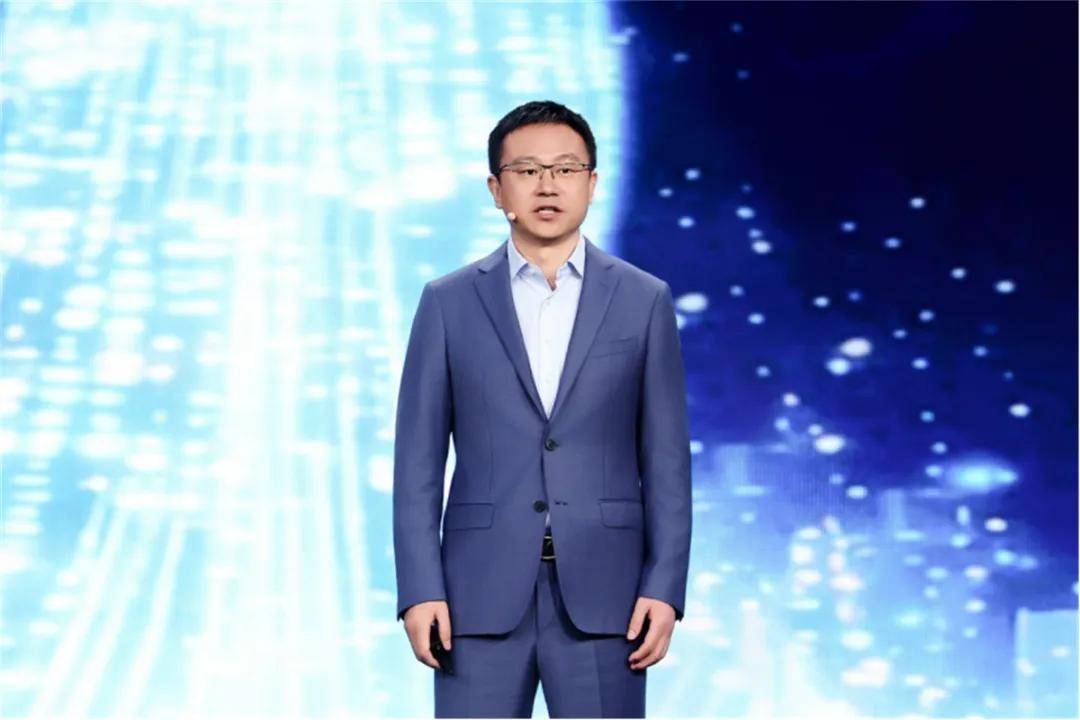
[Xu Chao, Vice President of Huawei China Government and Enterprise Business]
Huawei and Partners Deeply Cultivate "Industry + AI"
Guo Zhenxing, Vice President of Huawei China Government and Enterprise Business, pointed out that 2025 is the first year of deep integration of "Industry + AI." Through sincere cooperation between Huawei and its partners, fruitful results have been achieved in finance, government affairs, education, healthcare, scientific research, manufacturing, automotive, electric power, transportation, oil and gas mining, and many other industries. 2026 is the year of deep cultivation of "Industry + AI." To this end, Huawei, together with ISV and SI partners, launched 26 "Industry + AI" all-in-one solutions for the sinking market, helping customers achieve out-of-the-box use, no on-site integration required, and rapid business launch.
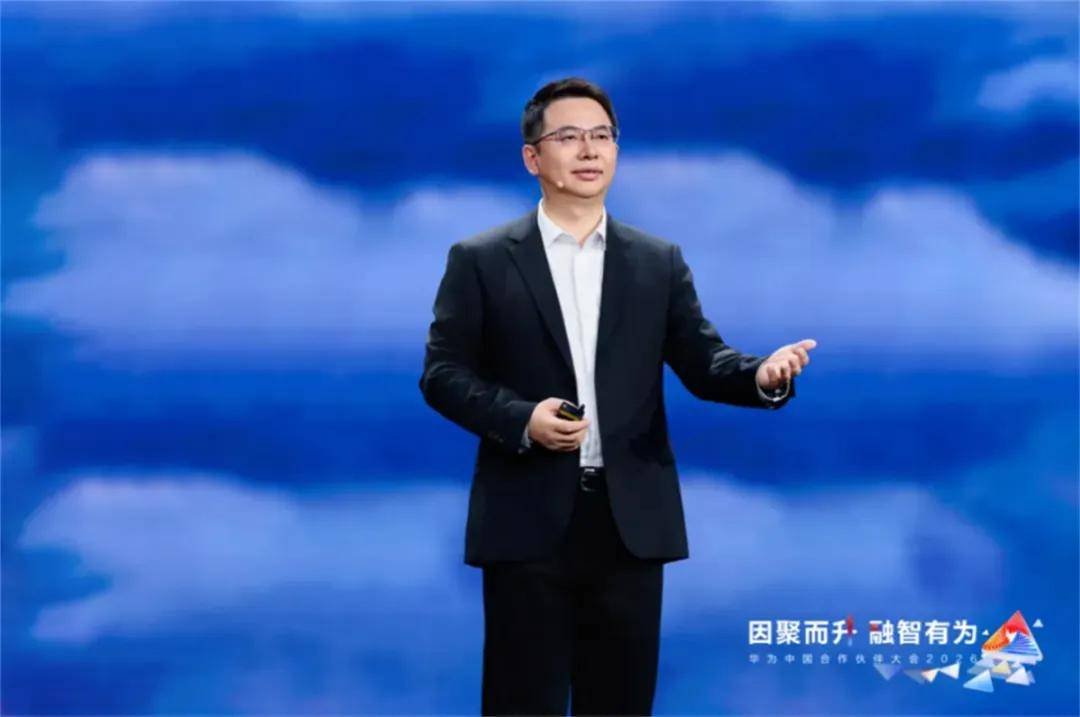
[Guo Zhenxing, Vice President of Huawei China Government and Enterprise Business]
At the conference site, Guo Zhenxing also invited partner representatives to jointly release 8 major "Industry + AI" flagship solutions, and jointly launched the pioneer action for "Industry + AI" all-in-one solutions for the sinking market. These solutions and pioneer actions will further promote the widespread application and deep integration of AI technology in various industries and fields, providing strong impetus for the digital and intelligent transformation of thousands of industries.


